Tuesday, July 21, 2026

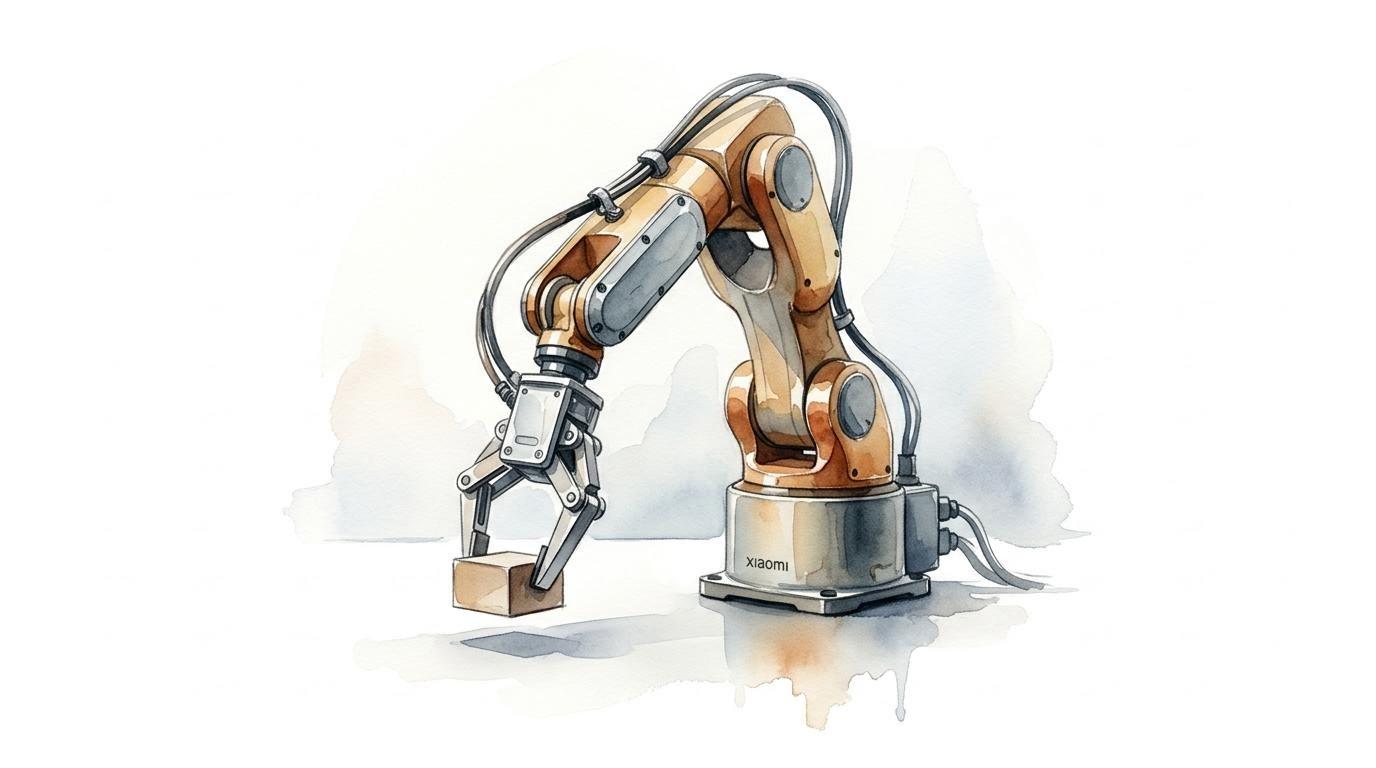
Xiaomi’s Robot Model Arrives

Xiaomi’s Robot Model Arrives

Today’s Overview

Good morning, robots are getting a real data diet, Washington is circling Chinese open models, and a tiny random-number prompt might be enough to identify the LLM behind an API. The thread running through it all: AI systems are becoming easier to deploy, harder to hide, and much more political. Let’s dive in.

Top Stories

OpenAI Strategist Clarifies Open-Weight AI Comments

Dean W. Ball, OpenAI’s newly appointed head of strategic futures, walked back the tone of viral comments about China’s Kimi K3 model and open-weight AI strategy. He said his original style was too analytically blunt for his new role, while still defending his national security thesis about frontier open-source AI.

  • Ball’s role matters because he now leads OpenAI’s Strategic Futures team focused on frontier AI policy and internal governance.
  • His critique landed amid broader backlash, including public attacks from senior Pentagon figures over his views on regulation and Chinese AI.
  • The controversy centered on whether powerful open-weight models could create state-run AI infrastructure rather than a market-led ecosystem.

Xiaomi Releases Robot Foundation Model

Xiaomi-Robotics-1 is a ready-to-use robot foundation model trained on more than 100,000 hours of real-world manipulation trajectories. It pairs large-scale embodiment-free pre-training with a smaller post-training stage using real-robot data, then aims to transfer those capabilities into downstream robot tasks with high data efficiency.

  • The pre-training corpus spans more than 1,700 scenarios across household, commercial, industrial, and outdoor environments.
  • Xiaomi added over 7,200 hours of in-house real-robot data from real homes for post-training.
  • With under 10 hours of demonstrations per task, the model reached 75% overall success on new tasks, nearly doubling the π 0.5 baseline at the same data budget.

Washington Weighs Pressure on Chinese AI Models

U.S. officials have explored ways to restrict Chinese AI models, including liability rules for hosting companies, public security warnings, and trade blacklist actions. The debate is unfolding as Chinese open-source models gain traction and U.S. policy circles split between national security concerns and competition risks.

  • One option discussed would require U.S. hosts of Chinese models to guarantee security and accept liability if that guarantee failed.
  • Commerce had previously considered adding multiple Chinese AI labs to the Entity List which would limit U.S. access without a license.
  • Some officials view procurement rules, blacklist threats, and public pressure as de facto restrictions even without a formal ban.

Research & Analysis

One Token Can Fingerprint LLMs

Researchers found that simple random-number prompts can reveal which model is sitting behind an opaque API. The result suggests that observable response distributions may be enough to fingerprint models even when providers do not expose the underlying system directly.

  • The study measured 165 models served through OpenRouter to compare their single-token response distributions.
  • Its prompt battery used four languages and asked models to name random numbers between 1 and 100.
  • The paper reports a 7.3% equal error rate for biometric-style verification with the full 40-cell battery.

HOMIE Personalizes Human-Object Video

HOMIE is a framework for human-object centric video personalization that handles both inter-subject and intra-subject inputs. It focuses on preserving subject fidelity while improving human-object interactions, using multimodal guidance and modality-reference embeddings to connect semantic features with video tokens.

  • The paper frames HOCVP as a core task inside subject-driven video generation where people and objects must remain faithful across generated clips.
  • The authors call out logos as a hard case because they can behave like abstract objects rather than ordinary physical references.
  • A released checkpoint is listed for homie-r2v-wan2.1 on Hugging Face.

TimeLens2 Grounds Video Evidence in Time

TimeLens2 is a generalist video temporal grounding system that predicts variable sets of evidence intervals across video lengths, domains, query types, and viewpoints. It uses interval-set supervision and a temporal Wasserstein reward to improve grounding when predictions have unequal cardinalities or fragmented spans.

  • Its training set, TimeLens2-93K, contains 93,232 verified instances drawn from 23,793 diverse videos.
  • The Hugging Face page listed it as the number one paper of the day after publication.
  • TimeLens2-4B reportedly beats Qwen3.5-397B-A17B on every benchmark by 7.5 average mIoU points.

Claude Claim Targets Jacobian Conjecture

Claude Fable 5 reportedly produced a one-line formula that breaks the Jacobian conjecture, a famous algebra problem dating back to 1939. Levent Alpöge posted the proof on X, and early discussion centered on whether the result is short enough for experts to verify directly.

  • The claim is unusually legible because the alleged counterexample is a single-line formula rather than a long machine-generated proof.
  • Coverage described the conjecture as a question about whether certain polynomial maps passing a local test must be globally reversible everywhere.
  • Outside reports emphasized that the result still faces expert verification before it can be treated as settled mathematics.

Trending AI Tools

  • Kimi Work Agentic desktop automation for local files, web tasks, background work, and Office-style outputs on Windows and macOS.

  • NVIDIA Cosmos 3 Edge A 4-billion-parameter open world model for robots and vision AI agents running on edge devices.

  • Google Frozen v2 A reported server chip project aimed at making Gemini inference more power efficient and less dependent on Nvidia.

Quick Hits

  • Alibaba Qwen 3.8-Max previewed a 2.4-trillion-parameter multimodal Mixture-of-Experts model with OpenAI and Anthropic API compatibility and planned open weights.

  • Cognition acquires TierZero to strengthen software automation capabilities inside Devin.

  • Alibaba opens SAIL as the software stack for its Zhenwu AI chips, targeting migration barriers around Nvidia’s CUDA ecosystem.

  • Anthropic and Meta are discussing a reported $10 billion data center lease that would give Anthropic access to Nvidia GPU clusters.

Keep reading for free

Enter your email. If you're already subscribed, we'll send a sign-in code. If not, you'll subscribe in the next step.

Free access. Subscribe once, then use the same email on future issues.

Free to read. Subscription just unlocks the full issue.