Thursday, June 18, 2026

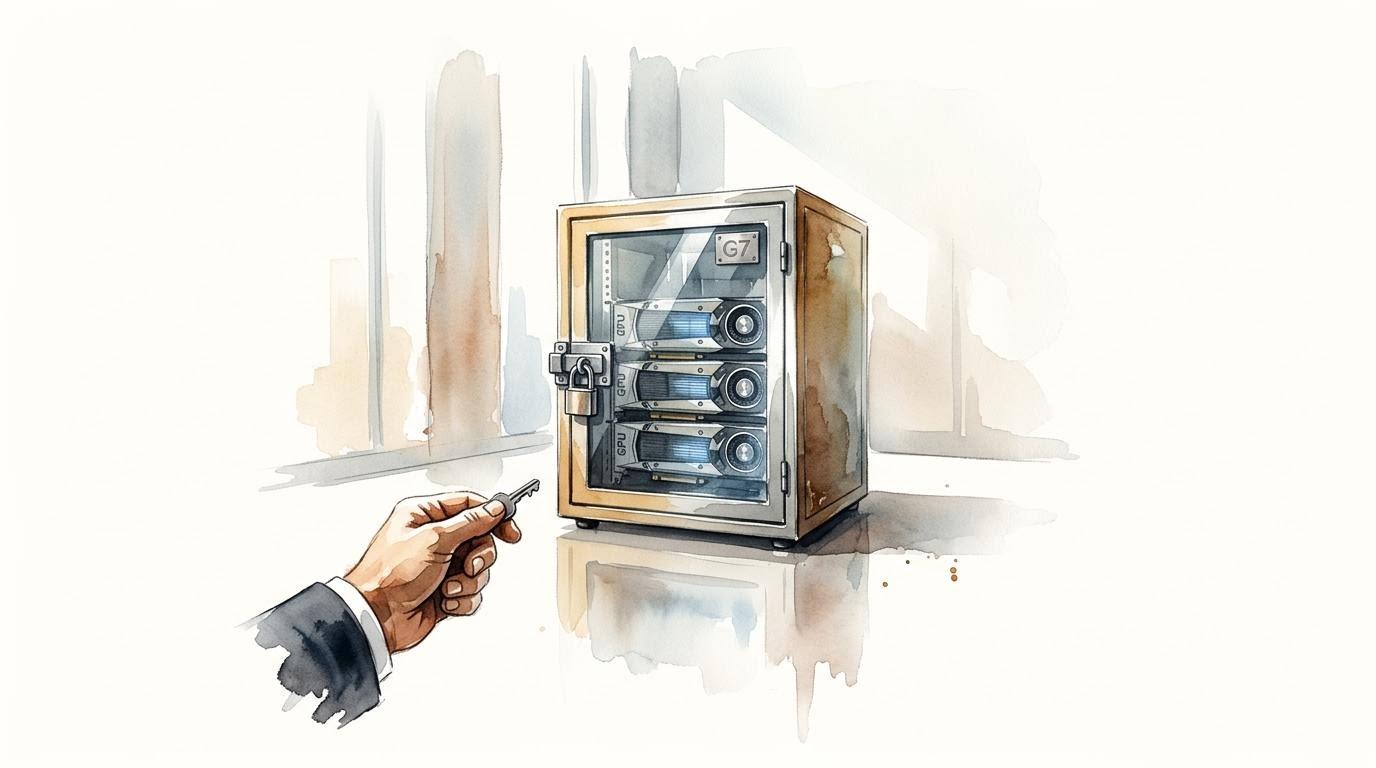
The G7’s AI Power Standoff

The G7’s AI Power Standoff

Today’s Overview

Good morning, AI is getting pulled in two directions at once: Android is turning apps into agent-ready tools, while G7 leaders and top AI CEOs wrestle over who controls access to frontier models. Meanwhile, Sakana is stretching research agents into full strategy-report territory. Let’s dive in.

Top Stories

Android 17 Turns Apps Into Agent Tools

Android 17 introduces new AI-focused capabilities built around AppFunctions and Android MCP. The shift lets apps expose orchestratable tools that on-device agents can discover and execute, positioning Android as a more deeply AI-integrated platform.

  • Google says Android 17 is available on most supported Pixel devices with more devices running it expected in the coming months.
  • The AppFunctions Jetpack library is currently in alpha and is designed to make tool exposure easier through class annotations and KDoc comments.
  • Gemini integration for AppFunctions is in private preview while developers can test integrations through ADB commands and a test agent app.

Sakana AI Launches Eight-Hour Research Agent

Sakana AI launched a long-running research agent aimed at business strategy work. The system is designed to spend up to eight hours producing reports that can stretch to 100 pages, putting agentic research closer to corporate strategy workflows.

  • The product is called Sakana Marlin and is positioned as an autonomous research assistant for businesses.
  • Its output can include executive summary slides alongside appendices, references, and a structured long-form report.
  • The workflow starts from a user-provided research topic then runs autonomously rather than relying on rapid back-and-forth prompting.

AI Leaders Face G7 Access Fight

The U.S. government and Anthropic remain stuck over export restrictions that took the company’s top models offline. The dispute is now playing out alongside G7 AI talks in France, where leaders and executives are discussing AI regulation, safety, and access to frontier systems.

  • The restricted Anthropic models are named Fable 5 and Mythos 5 and were taken offline after a U.S. government directive.
  • G7 discussions included a possible trusted partners framework for access to advanced U.S. AI models among allied countries.
  • The summit’s AI participants included major lab CEOs from Anthropic, OpenAI, Google DeepMind, and other leading AI companies.

Research & Analysis

Domain Expertise Wins In Claude Code

Anthropic analyzed 400,000 Claude Code sessions to understand how humans and agents divide coding work. The findings suggest domain knowledge matters more than formal coding experience, with users making most planning decisions while Claude handles most execution choices.

  • The dataset covered about 235,000 people using Claude Code between October 2025 and April 2026.
  • Anthropic found debugging’s share of sessions fell by nearly half as usage shifted toward more end-to-end agentic workflows.
  • The estimated value of typical tasks rose about 25% on average across nearly every category of work studied.

Americans Use AI More But Trust It Less

Pew’s 2026 survey data shows AI adoption rising while public optimism keeps slipping. About half of U.S. adults now use chatbots, but far more people expect AI to make society worse than better over the next 20 years.

  • Pew’s earlier 2024 benchmark found one-third of U.S. adults had used an AI chatbot, giving the 2026 figure a clear adoption jump.
  • Among chatbot brands, ChatGPT led usage ahead of Gemini, Copilot, Meta AI, Grok, Claude, and Character.ai.
  • A related Pew finding showed many Americans want more control over how AI is used in their daily lives.

MiniMax Scales Sparse Attention To Million-Token Contexts

MiniMax released a sparse attention architecture for scaling long-context inference while trying to preserve quality. On a 109B multimodal model, the approach reportedly matched GQA performance while reducing attention compute by about 30x at 1M tokens.

  • The GitHub package ships dense FlashAttention and sparse top-k kernels for NVIDIA SM100 hardware.
  • The implementation uses two JIT-compiled stacks that share one Python package.
  • Its example sparse prefill path uses page size 128 and top-k 16 in the provided usage snippet.

Trending AI Tools

  • NVIDIA XR AI Public beta foundation for building agents for AI glasses, AR glasses, and XR headsets.

  • Cursor’s New Model A forthcoming agentic software development model trained from scratch on over 100,000 GPUs.

  • OpenAI Deployment Simulation A testing pipeline that runs 1.3 million de-identified conversations through next-gen systems to find hidden vulnerabilities.

Quick Hits

Keep reading for free

Enter your email. If you're already subscribed, we'll send a sign-in code. If not, you'll subscribe in the next step.

Free access. Subscribe once, then use the same email on future issues.

Free to read. Subscription just unlocks the full issue.