Wednesday, May 27, 2026

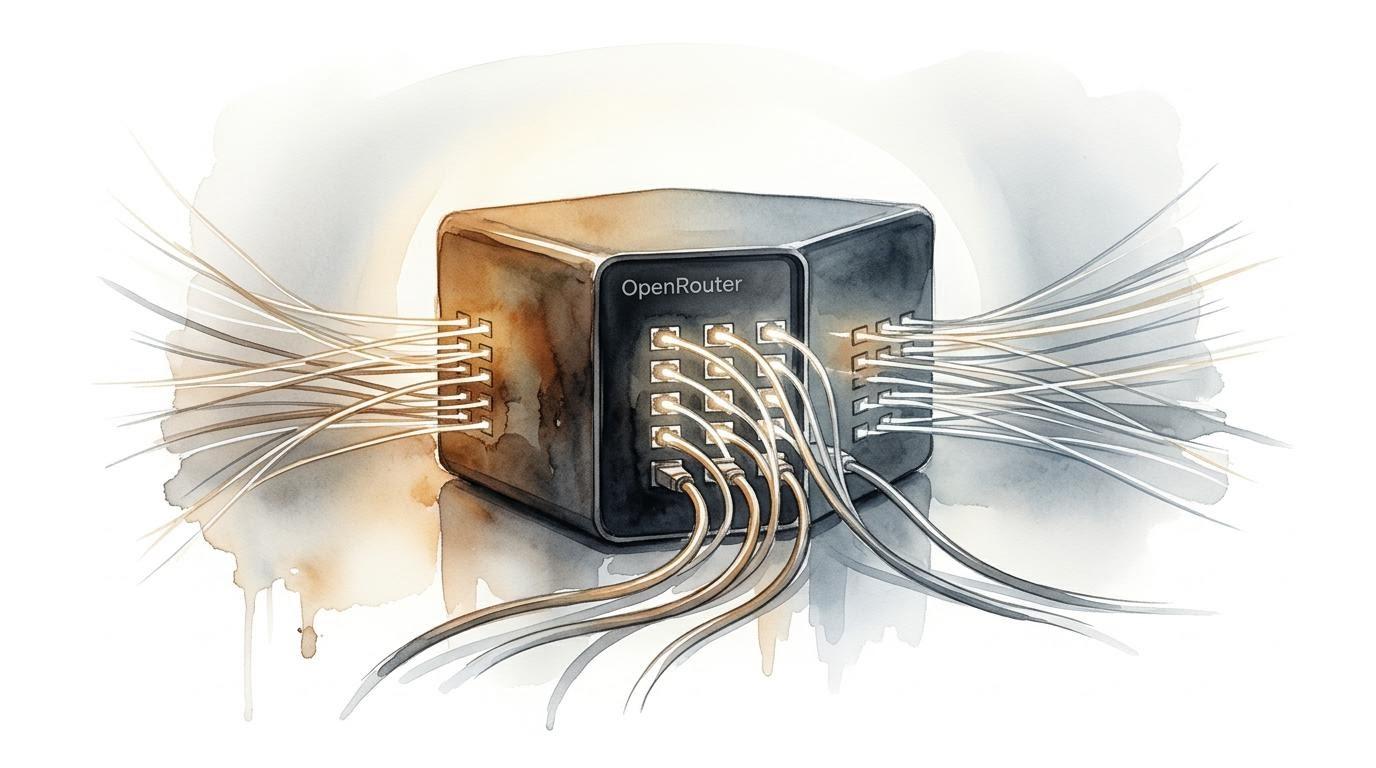
OpenRouter’s Big AI Bet

OpenRouter’s Big AI Bet

Today’s Overview

Good morning, OpenRouter just turned a huge funding round into a bigger signal about where AI is headed. We also have a sharp take on AGI timelines, a fresh benchmark for long-horizon coding, and a wave of new tools for agents, local LLMs, and cleaner workflows. Let's dive in.

Top Stories

OpenRouter tops $1.3 billion valuation

OpenRouter raised $113 million in a Series B led by CapitalG, pushing its valuation to about $1.3 billion. The company says it now supports more than 400 models and processes 100 trillion tokens a month. That scale makes it a major piece of the multi-model stack.

  • OpenRouter was founded in 2023 and has quickly become a major AI gateway used by enterprises and other AI users.
  • The company says it supports over 400 models including Anthropic, Google, OpenAI, xAI, and DeepSeek.
  • Its traffic has surged to 100 trillion tokens per month which it says is about 25 trillion per week, up 5x from six months ago.

OpenAI hires for self-improvement safety

OpenAI is adding a Preparedness team role focused on recursive self-improvement risks, with compensation up to $445,000. The job is aimed at technical work that anticipates problems that do not exist yet, from data poisoning to interpretability and automation tracking. It shows how quickly frontier labs are formalizing safety for more advanced systems.

  • The role is tied to OpenAI's Preparedness team which focuses on emerging risks from more capable systems.
  • One listed responsibility is data poisoning mitigation alongside building interpretability tools to inspect model activations.
  • The position also calls for metrics for technical automation to track how much AI can take over technical staff work.

Microsoft’s image model lands at No. 3

MAI-Image-2.5 debuts near the top of the Arena text-to-image leaderboard, with Microsoft highlighting stronger style variety, text rendering, and image detail. The model is positioned as a step up from MAI-Image-2 in visual reasoning, scene structure, and commercial illustration. It is built to turn simple prompts into polished images.

  • The model is described as improving visual reasoning which Microsoft says helps it handle more structured image generation.
  • Microsoft also points to stronger text rendering a useful edge for posters, ads, and other commercial outputs.
  • MAI-Image-2.5 is ranked No. 3 on Arena on the text-to-image leaderboard.

Research & Analysis

Hassabis puts AGI on a 2030 track

Demis Hassabis says AGI is on track for 2030, plus or minus a year, even though several core problems remain open. He singled out world physics, memory, consistency, and continual learning as the hard parts left to solve. He also sees the first major disease wins in oncology and immunology, then a broader engine for curing disease.

  • Hassabis still says several core problems are unresolved, including world physics which he sees as one of the biggest barriers on the way to AGI.
  • He also pointed to gaps in memory and continual learning as key limitations for current systems.
  • On medicine, he expects early gains in oncology and immunology before AI expands toward broader disease discovery.

Jensen Huang says AI should raise the bar

Jensen Huang argues students should stop chasing supposedly AI-proof subjects and instead ask how AI can elevate their learning and craft. He uses journalism to make the case that the best people will still be the ones who prepare, listen, and think about the audience. His broader point is that uniquely human qualities will matter more, not less.

  • Huang says the right question is not what is AI-proof but how AI can elevate your learning and purpose.
  • He used journalism to argue that strong work still depends on preparation and listening even when AI is in the loop.
  • He also invoked wabi-sabi as a way to describe the value of imperfectly human qualities.

DeepSWE sets a harder coding test

DeepSWE is a long-horizon software engineering benchmark built across 91 repositories in five languages. It emphasizes contamination-free tasks, real-world complexity, and reliable verification so models cannot rely on memorized solutions. The result is sharper separation between coding agents than benchmarks that cluster results more tightly.

  • DeepSWE spans 91 repositories across 5 languages, giving it a wider test surface than many coding benchmarks.
  • It is designed to be contamination-free so models cannot lean on pre-seen solutions.
  • The benchmark aims to produce sharper separation metrics between coding agents than clustered benchmarks like SWE-Bench Pro.

Trending AI Tools

  • Zero.xyz Connects AI agents to about 8,000 tools, APIs, and services.

  • Memdex Stores scattered AI conversations locally and reinjects past context into prompts.

  • Harbor A CLI and companion app for spinning up complete local LLM stacks.

Quick Hits

  • ElevenLabs Music v2 adds better vocals, improved instrumentation, multilingual support, and track-level inpainting.

  • DodoForm turns talking, photos, or scribbles into clean structured data.

  • SignalLEMO is AI-powered lead outreach for field service contractors.

Keep reading for free

Enter your email. If you're already subscribed, we'll send a sign-in code. If not, you'll subscribe in the next step.

Free access. Subscribe once, then use the same email on future issues.

Free to read. Subscription just unlocks the full issue.