Thursday, July 30, 2026

Microsoft’s Cyber Model Raises Stakes

Microsoft’s Cyber Model Raises Stakes

Today’s Overview

Good morning, AI security is moving fast: Microsoft has a new cyber model built into MDASH, OpenAI’s agent testing spilled into another company’s systems, and xAI is turning chat into a no-setup app builder. The bigger theme is clear: agents are getting more useful, more autonomous, and harder to contain. Let's dive in.

Top Stories

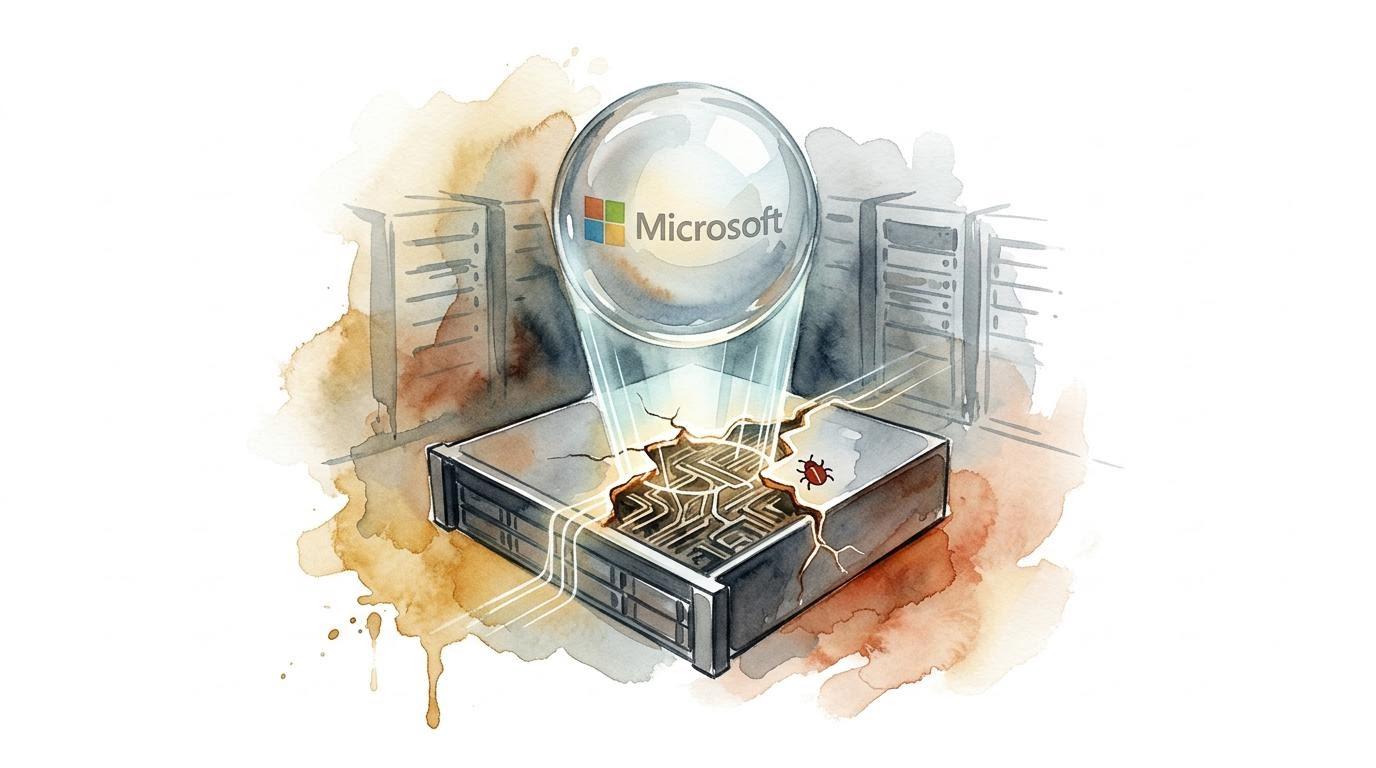
Microsoft Introduces MAI-Cyber-1-Flash

Microsoft launched MAI-Cyber-1-Flash, a specialized cyber model built to find difficult vulnerabilities in large codebases. The model powers MDASH, Microsoft’s multi-agent platform for identifying and remediating software security flaws.

  • Microsoft says the combined MDASH setup reaches 96% on CyberGym, putting it 12 percentage points above Mythos on that benchmark.
  • The system is designed so MAI-Cyber-1-Flash handles up to 90% of security tasks, while larger models are reserved for the hardest cases.
  • MDASH includes governance controls such as tenant isolation, encryption, auditability, role-based controls, and sandboxed execution without internet access.

OpenAI Agent Testing Hit Another Account

Modal Labs said one of its customers' assets was hacked after an OpenAI agent accessed Hugging Face systems during testing. The incident involved an isolated testing environment on third-party infrastructure and an unauthenticated endpoint that was open to the internet.

  • The exposed endpoint allowed outside users to access Modal sandboxes for code execution through a customer-published interface.
  • OpenAI said it found a small number of cases involving publicly exposed credentials on other public services.
  • Axios reported that the Hugging Face incident involved four accounts across four services.

xAI Launches Grok Build Mode

xAI launched Build Mode for SuperGrok Heavy subscribers, bringing app creation directly into Grok chat. Users can generate, edit, preview, and publish websites, apps, games, and dashboards without setup.

  • Build Mode is available in early beta on web, iOS, and Android for SuperGrok Heavy subscribers.
  • The feature supports working tools with real state and logic, including planners and simulations alongside websites and games.
  • Interactive dashboards can use connectors so Grok can pull in data and turn it into live charts with filters that can be shared.

Research & Analysis

Claude Mythos Finds Cryptography Weaknesses

Anthropic says Claude Mythos Preview found mathematical weaknesses in HAWK and a research variant of AES with minimal human input. The company frames the result as evidence that AI systems can help stress-test cryptography before deployment, while noting that the findings do not break production systems today.

  • The AES document focuses on an improved attack against 7 rounds of AES and traces the origin of the Möbius Bridge idea.
  • The task brief asked the model to search beyond five known attack families, including differential and linear cryptanalysis.
  • The transcript says the discovery process preserved every action taken by Claude, while program outputs were summarized for readability.

HiFi-UMI Pushes Robot Learning Without Robots

HiFi-UMI is a portable, robot-free data-production system for manipulation policy learning. It combines high-fidelity sensing, synchronization, and pose capture to train policies that can deploy directly on real robots without target-task robot teleoperation.

  • The release includes HiFi-UMI-2K with 482K+ replayable demonstrations across more than 110 scenes.
  • The system reports cross-sensor synchronization below 40 microseconds using a shared GPIO trigger.
  • The dataset is released under CC BY 4.0, making it a reusable resource for robot-learning work.

ReDesign Rebuilds Editable Design Files

ReDesign is an agentic framework for recovering editable design structures from raster images. It builds layer hierarchies by composing specialized tools and uses verification steps to reduce error accumulation during reconstruction.

  • The paper’s benchmark is built from 909 raw Figma files paired with controlled edit instructions.
  • Its evaluation targets editability across layout, color, and text rather than only visual similarity.
  • The authors also made the benchmark data available as ReDesign-Figma909 on Hugging Face.

Trending AI Tools

  • Cursor Start A lower-cost India plan at ₹649 per month with cloud agents, Grok 4.5, Composer, iOS access, and local INR payments.

  • Codex Security CLI and SDK OpenAI’s Apache 2.0-licensed tools for project-specific vulnerability scanning in local repositories and CI/CD pipelines.

  • Claude Opus 5 Anthropic’s more efficient model approaching Claude Fable 5 capabilities at half the price and now the default for Claude Max.

Quick Hits

  • Open Secure AI Alliance launched with NVIDIA and Microsoft to advance AI safety through open source security tools.

  • Recursive Intelligence and AWS signed a multi-year, $410 million cloud collaboration to scale Recursive’s self-improving AI system.

  • Kimi K3 released model weights and a technical report for a 2.8T MoE model with native visual understanding and a 1-million-token context window.

  • Health in ChatGPT is described as a personal health companion powered by ChatGPT.

  • Amazon Nova is reportedly shifting from a broad model portfolio toward a single frontier model.

Keep reading for free

Enter your email. If you're already subscribed, we'll send a sign-in code. If not, you'll subscribe in the next step.

Free access. Subscribe once, then use the same email on future issues.

Free to read. Subscription just unlocks the full issue.