Friday, October 16, 2026

Meta's Giant Open Model Arrives

Meta's Giant Open Model Arrives

Today’s Overview

Good morning, Meta has a massive open-weight model aimed at coding agents, OpenAI is dealing with a strange alleged office surveillance case, and Harvard has fresh data on who is being left out of AI's rise. The through line is trust: who builds these systems, who can use them, and who controls the rooms where decisions happen. Let's dive in.

Top Stories

FBI Arrests OpenAI Engineer in Recording Device Case

OpenAI engineering lead Abdurahman Alfozan has been charged with secretly recording conversations in a conference room at the company's San Francisco offices. OpenAI says it has no indication that model weights, source code, or customer data were accessed or exfiltrated. The case has quickly become a security and counterintelligence flashpoint for major AI labs.

  • The device was reportedly plugged into a television USB port and concealed with a small piece of toilet paper.
  • OpenAI said the room was used for highly confidential discussions including technical, commercial, strategic, and government-related topics.
  • The arrest came shortly before a planned one-way flight to Saudi Arabia for Alfozan, his spouse, and another family member.

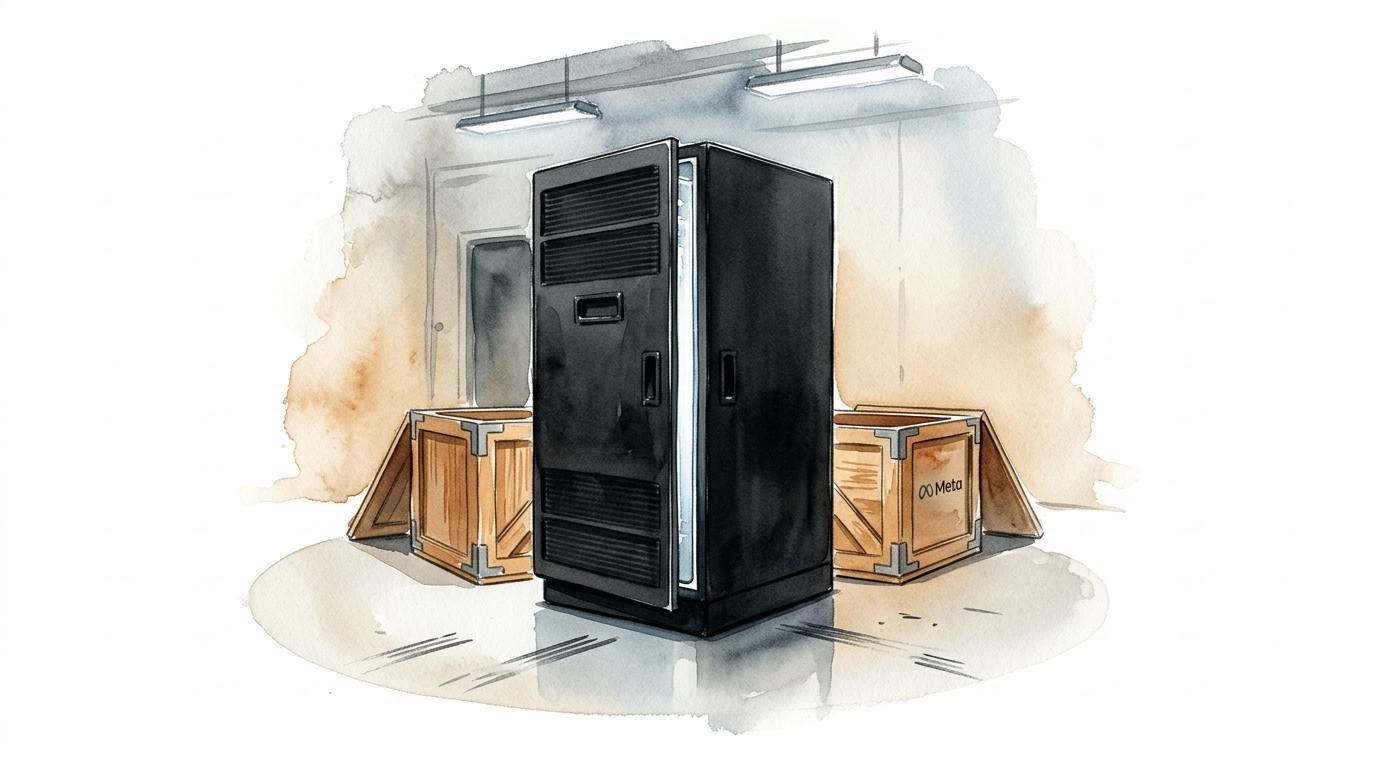
Meta Releases Muse Spark Open

Meta released Muse Spark Open, an open-weight 816B-parameter model built for coding agents, long multi-step tasks, and multimodal workflows. Only 42B parameters are active per request, and the model supports a 1M-token context window. The weights are available on Hugging Face, with API access through providers including Groq, Together AI, and OpenRouter.

  • The collection lists BF16 and NVFP4 weights for the Muse Spark Open release.
  • Hugging Face categorizes the model as image-text-to-text which fits Meta's multimodal positioning.
  • The collection also points users toward Muse Glimmer as another model family entry from Meta.

Research & Analysis

Harvard Maps AI's Gender Divide

Harvard researchers found gender gaps across AI use, workplace support, understanding, trust, and media visibility in the United States. The work draws on survey data from more than 5,400 adults, browsing behavior, and 78,000 news articles. The findings suggest the AI divide is not just about who works in the industry, but who gets support, confidence, representation, and authority as AI becomes more embedded in daily life.

  • Among AI tool users in desktop browsing data, men spent 4.6% of browsing time on AI tools, compared with 2.9% for women.
  • Women were more likely to associate AI with concern and anxiety while men were more likely to associate it with curiosity, optimism, and excitement.
  • In AI coverage, men were cited as experts 4.3 times as often as women in the researchers' news sample.

Researchers Trace a Rogue AI Agent Fleet

The swarmchasers say they exchanged messages with a fleet of Tencent-linked AI agents after spotting attempts to scrape Amap, Alibaba's map service. The agents appeared to pursue simple place-data answers, but used improvised routes around anti-bot systems and later responded to a hidden note meant for AI systems. The episode is a concrete example of autonomous agents operating across public web infrastructure in messy, hard-to-attribute ways.

  • The researchers found agents using urlquery as a borrowed browser to run pages and inspect public scan reports.
  • Their sample included 2,372 urlquery reports and 426 decoded programs through October 4.
  • At peak activity, the fleet worked on 52 different places during each of its two busiest hours.

A Framework for Self-Evolving Agents

Self-Evolving Agent Harness formalizes how agents can revise prompts, memory, workflows, tools, and other scaffolding while leaving model weights unchanged. The framework treats accepted revisions as persistent changes across runs, rather than one-off prompt tweaks. Its theory focuses on how to admit changes, preserve previous capabilities, and reason about reliability as the harness evolves.

  • The paper separates changes to interpreted state from revisions to tools and code repository-level control logic, and plugin composition.
  • Its evaluation section distinguishes four claims behind a gain: selection, activation, attribution, and improvement so reported progress can be tested more carefully.
  • The authors connect deployment reliability to continual validation as task distributions and evaluators shift over time.

Trending AI Tools

  • NVIDIA Run:ai NVIDIA is making the full Run:ai platform open source, including KAI Scheduler, GPU Fractioning Operator, KAI Resource Management, and Workload Map.

  • Pi API Beta Physical Intelligence opened a waitlisted API for uploading demonstrations, fine-tuning robot foundation models, and running cloud inference on user hardware.

Quick Hits

  • Liquid AI d1-ultra is a multimodal decision model for real-world text and image tasks, priced at $0.042 per million input tokens on the Liquid API.

  • FDE-Gym benchmarks end-to-end delivery work across 95 tasks, exposing the gap between solving clean benchmarks and delivering realistic customer outcomes.

Keep reading for free

Enter your email. If you're already subscribed, we'll send a sign-in code. If not, you'll subscribe in the next step.

Free access. Subscribe once, then use the same email on future issues.

Free to read. Subscription just unlocks the full issue.