March 11, 2026

Meta makes its move, AI agents gather & more

Meta makes its move, AI agents gather & more

Today’s Overview

Enterprises are rapidly adopting multimodal and agentic AI as leading providers embed advanced models into core productivity suites and open toolchains. This wave is driven by Google’s expanded Gemini capabilities, Meta’s acquisition of an AI‑agent network, and Nvidia’s open‑source agent platform, signaling a shift toward integrated, on‑premise and cloud AI services.

  • Google launched Gemini Embedding 2, a multimodal model that handles text, images, video, audio and documents in over 100 languages for retrieval and semantic search.
  • Google upgraded Gemini across Workspace, enabling AI‑assisted drafting, spreadsheet generation and presentation creation that pulls context from files, email and the web.
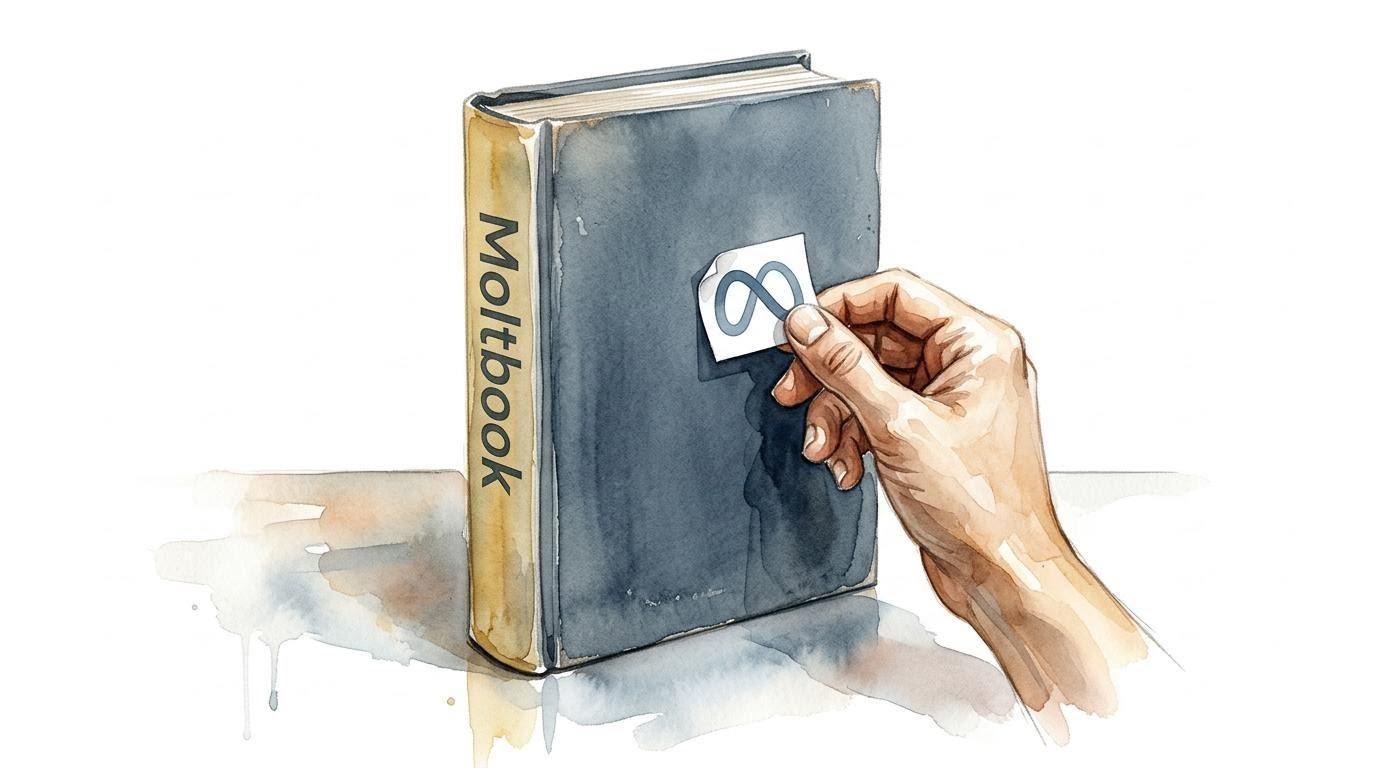
  • Meta acquired Moltbook, an AI‑agent social platform built on OpenClaw, to strengthen its ecosystem for autonomous agent collaboration.
  • Nvidia open‑sourced the Nemoclaw platform, providing tools such as OpenClaw, ClawDBot and MoltBot for building workflow‑automation agents across APIs and databases.
  • OpenAI added interactive visual modules to ChatGPT, allowing real‑time variable manipulation for more than 70 math and science concepts.
  • a16z’s Consumer AI Top 100 report highlighted the growth of Claude and Gemini alongside ChatGPT, mapping emerging Western, Chinese and Russian AI ecosystems.

Top Stories

Google unveils Gemini Embedding 2 multimodal model

Google has launched Gemini Embedding 2, a multimodal embedding model that supports text, images, video, audio, and documents. The model works with more than 100 languages and can process up to 8,192 text tokens, six images, 120-second video clips, and six-page PDFs, employing Matryoshka Representation Learning for flexible output dimensions. Early users have reported strong results on retrieval-augmented generation and semantic search applications.

Read Full Article

a16z releases sixth edition of Consumer AI Top 100

a16z has issued the sixth edition of its Consumer AI Top 100, adding AI-enhanced versions of popular apps such as Canva, CapCut, Notion and Grammarly. The ranking shows ChatGPT still leads with 900 million weekly users, while Claude and Gemini have more than doubled their paid subscriber bases in the last year. The report also identifies three emerging AI ecosystems - Western, Chinese, and Russian - and notes the rise of consumer AI agents like Manus.

Read Full Article

Meta acquires AI-agent network Moltbook

Meta has acquired Moltbook, a social platform that enables AI agents built with the OpenClaw framework to interact and maintain a persistent directory. The acquisition broadens Meta's AI ecosystem by providing a dedicated space for autonomous agents to collaborate. Moltbook's agent-centric architecture is viewed as a foundation for future AI-driven services and community features.

Read Full Article

Research & Analysis

OpenAI adds interactive visual modules to ChatGPT

OpenAI has introduced interactive visual modules to ChatGPT, supporting over 70 mathematics and science topics. Users can adjust variables within the visualizations and receive real-time updates to formulas and diagrams, improving the learning experience. This capability extends ChatGPT beyond text-only responses, strengthening its role as an educational assistant.

Read Source

Study quantifies infrastructure noise in agentic coding benchmarks

A recent study investigated how variations in hardware, software stacks, and runtime configurations impact agentic coding benchmark results. The researchers discovered that infrastructure noise can cause significant score fluctuations, undermining the reliability of single-run benchmark reports. They recommend adopting more robust, standardized evaluation practices to improve result consistency across environments.

Read Source

Google upgrades Gemini integration across Workspace

Google has upgraded Gemini across its Workspace suite, allowing the model to draft documents, generate spreadsheets, and create presentations. The enhancements automatically extract context from users' files, email, and web content to inform the generated output. This integration is designed to streamline productivity workflows and embed generative AI more deeply into everyday office tasks.

Read Source

Hume AI releases TADA speech-generation system

Hume AI has released TADA, a speech-generation system that tightly synchronizes text and audio streams to reduce hallucinations. TADA can generate speech up to five times faster than competing solutions while remaining lightweight enough for on-device deployment. The technology is intended to enhance the reliability and speed of AI-generated speech across diverse applications.

Read Source

Trending Tools

  • Claude Code adds automated code review feature

    Claude Code now offers an automated pull-request review tool that identifies logic errors, security issues, and regressions via multi-agent analysis. Results appear as inline comments with severity tags, integrating seamlessly into existing review workflows without blocking or approving changes.

  • RCLI delivers on-device voice AI for macOS

    RCLI provides an on-device voice AI assistant for macOS that can control apps and perform 38 predefined actions. It supports multiple local AI models and can index local documents for private, cloud-free queries.

  • Claude Code introduces scheduled-tasks feature

    Claude Code now includes a scheduled-tasks feature that lets users create recurring prompts to monitor builds, check logs, and automatically generate pull requests. This capability extends Claude's usefulness as an autonomous coding assistant within DevOps pipelines.

Quick Hits

Join the AI Recap Newsletter

Get the latest AI news, research insights, and practical implementation guides delivered to your inbox daily.

By subscribing, you agree to our Terms of Service and Privacy Policy.