February 24, 2026

Grok enters the vault, Pentagon AI stakes & more

Grok enters the vault, Pentagon AI stakes & more

Today’s Overview

Enterprise and government adoption of generative AI is accelerating as leading firms secure strategic partnerships and deploy new models at scale. Simultaneously, breakthroughs in model capabilities and infrastructure investments are reshaping competitive dynamics across defense, software development, and consumer services.

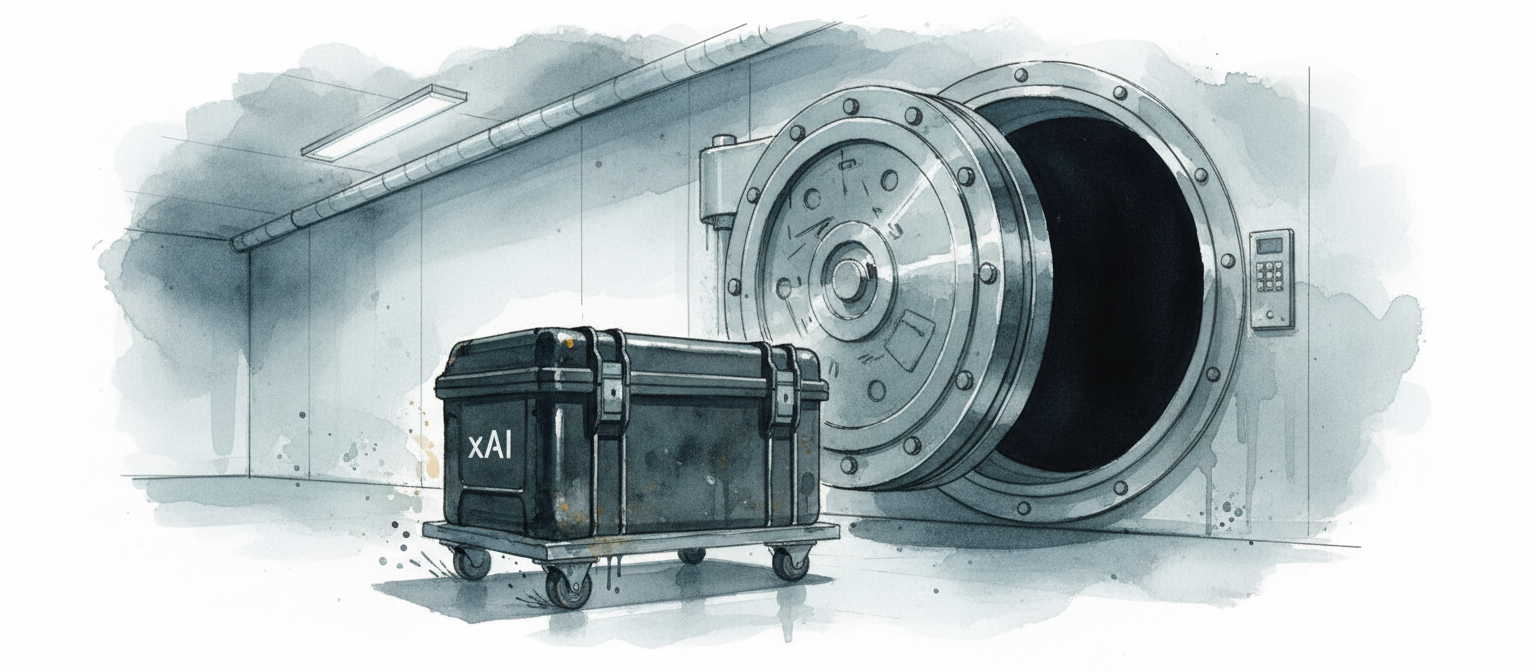
  • The Pentagon signed a contract with xAI to embed the Grok model in classified defense systems, expanding the military’s generative‑AI toolkit alongside Anthropic’s Claude.
  • OpenAI launched its Frontier Alliance, partnering with consulting giants McKinsey, BCG, Accenture and Capgemini to embed AI agents across large enterprises.
  • Anthropic’s Claude Code now automates legacy COBOL modernization, a capability that triggered a sharp drop in IBM’s share price.
  • Meta announced a 6‑gigawatt acquisition of AMD GPUs, complementing an expanded Nvidia deal and underscoring the scale of its AI compute demand.
  • Google delivered three major updates in a week, including Gemini 3.1 Pro’s 77.1% ARC‑AGI‑2 score, Lyria 3’s AI‑generated music with watermarked SynthID, and a free AI‑literacy program for six million U.S. teachers.

Top Stories

OpenAI partners with leading consulting firms for Frontier agents

OpenAI announced multi-year agreements with consulting firms McKinsey, BCG, Accenture and Capgemini under its Frontier Alliance program. The collaborations will create certified teams that help customers embed AI agents, launched earlier this year, into existing technology stacks. Accenture has already begun enterprise AI projects as part of the effort. The partnerships are intended to accelerate AI adoption across large organizations.

Read Full Article

Pentagon chief calls Anthropic CEO to discuss military AI access

Pentagon leader Peter Hegseth requested a meeting with Anthropic CEO Dario Amodei to review the company's access to military AI systems. Officials warned that insufficient safeguards could lead to a termination of the partnership. The discussion focused on ensuring that Anthropic's Claude model complies with defense security requirements. Both parties indicated a willingness to work toward enhanced safety protocols.

Read Full Article

Research & Analysis

GPT-5.3 Codex completes 25-hour coding sprint

OpenAI conducted a stress test in which the GPT-5.3 Codex model was given an empty repository and unrestricted compute resources. Over roughly 25 hours the model generated about 13 million tokens, producing around 30,000 lines of code that formed a functional design tool. The experiment demonstrates the model's capacity for sustained, high-volume coding tasks and its potential for long-running development workloads.

Read Source

Anthropic unveils AI Fluency Index

Anthropic introduced the AI Fluency Index, a framework for measuring how effectively individuals and organizations use AI tools. Unlike traditional model-centric benchmarks, the index evaluates practical competence and adoption across real-world workflows. By focusing on human-AI interaction, the metric aims to guide improvements in AI integration and productivity. The initiative seeks to provide a standardized way to track AI fluency as the technology becomes ubiquitous in work environments.

Read Source

Citrini Research releases report on agentic AI's economic impact

Citrini Research published a report outlining hypothetical scenarios of how agentic AI could influence economic activity. The analysis suggests that widespread deployment of autonomous agents may trigger significant market volatility. The findings were cited in discussions about the recent Monday stock sell-off. The report emphasizes the need for policymakers and investors to consider the potential systemic effects of AI-driven automation.

Read Source

Self-aware Reasoning Efficiency (SAGE) boosts large model inference

The SAGE framework introduces a self-aware sampling technique that lets large reasoning models decide when additional computation is unnecessary. By dynamically terminating inference early, SAGE reduces wasted cycles and token usage. Its reinforcement-learning variant, SAGE-RL, transfers these efficiency patterns into standard inference pipelines. Across six challenging mathematics benchmarks, SAGE-RL achieved higher accuracy while consuming fewer tokens.

Read Source

Trending Tools

  • Claude Code enables automated COBOL modernization

    Anthropic announced that Claude Code can now automatically modernize legacy COBOL codebases. The feature prompted a notable decline in IBM's share price, reflecting market concerns over AI-driven code transformation.

  • Production-ready identity framework for AI agents

    Teleport introduced a standards-driven Agentic Identity Framework that gives production AI agents built-in identity, access controls, and governance. The solution provides short-lived delegated identities and fine-grained permissions to close the security gap as agents move from research to production.

  • Spotify expands AI-powered Prompted Playlists to four new countries

    Spotify announced that its AI-driven Prompted Playlists feature is now available in the United Kingdom, Ireland, Australia, and Sweden. The expansion follows the initial launch in the United States and aims to broaden personalized listening experiences.

Quick Hits

Join the AI Recap Newsletter

Get the latest AI news, research insights, and practical implementation guides delivered to your inbox daily.

By subscribing, you agree to our Terms of Service and Privacy Policy.

Grok enters the vault, Pentagon AI stakes & more | AI Recap