Friday, September 18, 2026

Google’s Household Agent Gets Real

Google’s Household Agent Gets Real

Today’s Overview

Good morning, Google is turning the family inbox into an agent workspace, DeepSeek is chasing cheaper million-token contexts, and AI slowdown politics just got messier on both sides of the Pacific. The throughline is simple: agents are moving from demos into homes, labs, and policy fights. Let's dive in.

Top Stories

DeepSeek Compresses the Million-Token Context

DeepSeek introduced DeepSeek-V4.1-Flash, a multimodal Mixture-of-Experts model built around deployment cost reduction. It combines cross-layer KV cache reuse, FP4 KV caching, and SWA Bounded Replay to shrink cache footprints while supporting contexts up to one million tokens. The release is positioned for input-heavy agentic workloads, with checkpoints available on Hugging Face.

  • The architecture uses a 40-layer Causal Encoder-Decoder split into a 20-layer causal encoder and a 20-layer decoder.
  • Sparse attention assigns layers to Full, Reindex, or Reuse modes so later layers can share KV data and sparse-attention indices.
  • The model includes 196B parameters of Engram memory accessed sparsely through token-based lookup.

Trump and Beijing Reject AI Slowdown Calls

President Donald Trump rejected Dario Amodei’s call to slow frontier AI, while China’s Foreign Ministry also dismissed the proposal as fear-mongering. The clash makes a coordinated international restraint effort look much harder, especially because the debate is tied directly to chips, data centers, and U.S.-China competition. Beijing’s response focused on the proposal’s attempt to keep China away from top AI chips.

  • Trump argued that AI needs only a strong and smart president rather than a new layer of guardrails.
  • Amodei’s essay cited AI building future AI and the OpenAI agent swarm cyberattack as reasons to slow development.
  • The debate is already spilling into politics, with data centers and job losses emerging as pressure points before the November midterm elections.

Google Tests a Family AI Agent

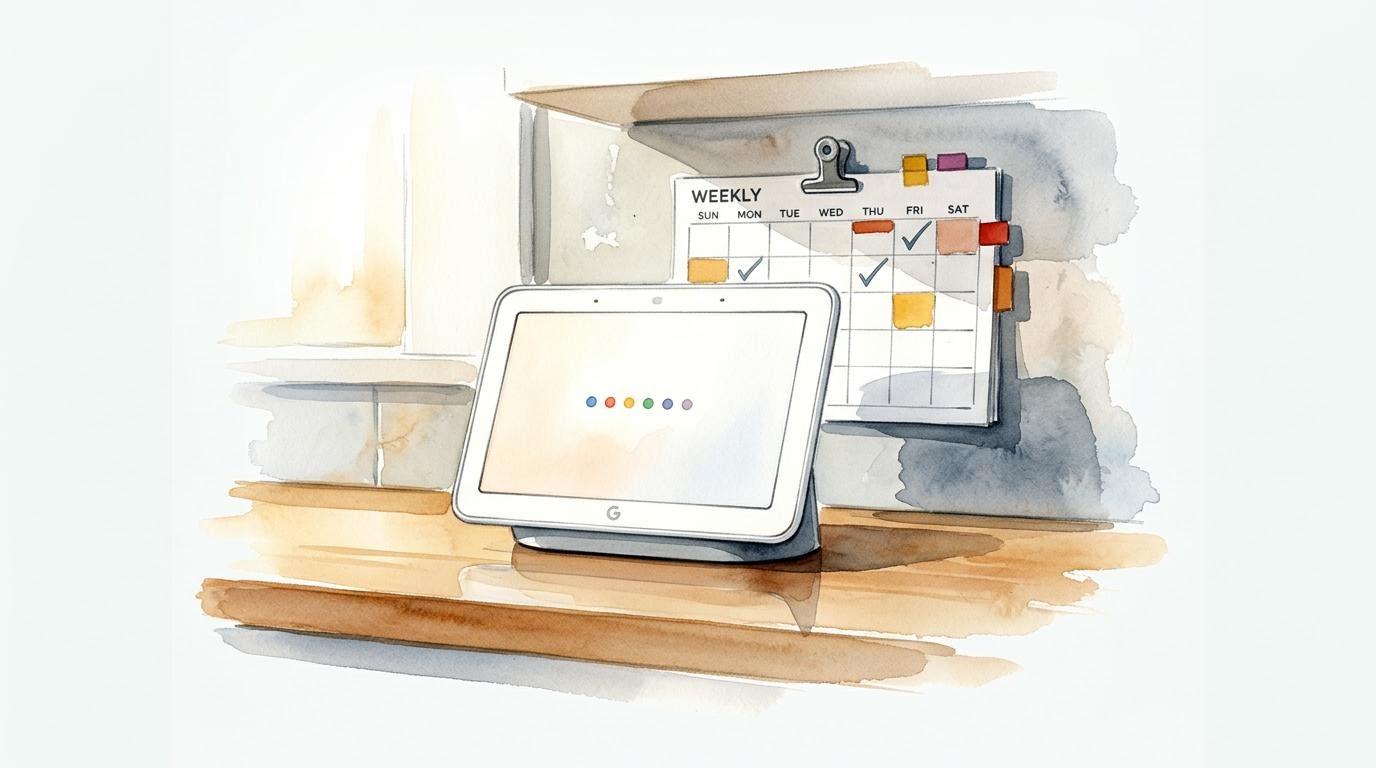
Google is expanding CC into an AI agent for families and households. The agent runs on its own cloud computer and Google account, turning shared household emails, files, and calendars into daily briefings and updated plans. It can coordinate activities for up to six people and asks permission before acting outside the group.

  • CC can deliver a shared Your Day Ahead brief so household logistics are not trapped in one person’s inbox.
  • The agent can work across Gmail, Chat, Docs, and Calendar while using Google’s agentic harness and Gemini models behind the scenes.
  • Access is limited to U.S. adults with personal Google accounts through an early Google Labs experiment and waitlist.

Research & Analysis

JEPA-Anything Aims for Cross-Domain World Models

JEPA-Anything proposes a domain-agnostic world-modeling framework based on orthogonal predictive factorization. It decomposes latent targets into complementary factors, learns them through dedicated pathways, and recombines them within a shared predictive design. The authors report gains across vision, biology, clinical trajectories, control, molecular dynamics, physical fields, and weather.

  • The evaluation includes representation learning alongside intervention prediction, out-of-distribution generalization, and long-horizon dynamics.
  • In Interventional Pong, the system reports a 34.8% lower single-intervention error than the matched comparison setup.
  • The biology result includes experimental support across cell co-cultures, patient-derived organoids, tumor fragments, and mice.

SoL-Pi Cuts Agent Harness Costs

SoL-Pi proposes an RSI-inspired harness-layer approach for scaling auto-research loops across coding-agent environments. The paper frames token efficiency as a bottleneck for unattended coding agents that run long trajectories of reasoning, tool use, and feedback. On EdgeBench, it reports comparable performance to Pi while sharply reducing token traffic and API cost.

  • The selected mechanisms span action execution and context compaction plus observation handling and delegated reading.
  • The benchmark covers 51 EdgeBench tasks used to compare SoL-Pi with Pi across GPT-5.6 Sol and Opus 5.
  • The authors estimate $8.75 to $13.50 hourly savings relative to native Codex and Claude Code harnesses.

Coding Harness Design Gets Dissected

This study isolates planning, action space, and context management inside a lightweight coding harness to measure how each piece affects agent performance. Across four models, the authors test 176 matched settings on SWE-Bench Verified and Terminal-Bench 2.1. The headline finding is that harness choices matter differently depending on model strength and context budget.

  • The harness keeps the execution loop fixed while varying planning, tool interfaces, and context management.
  • Context management mainly helps by preventing context-overflow failures rather than substantially changing agent behavior.
  • Trajectory analysis suggests planning changes where runs stop while action space changes the granularity of code-writing steps.

Transluce Calls for Embedded AI Evaluators

Transluce outlined how independent evaluators embedded inside AI labs could investigate frontier risks under privileged access. The proposal focuses on multi-agent coordination, targeted persuasion, evaluation awareness, and concealed reasoning. It argues that unreleased models and internal training practices create oversight gaps that external testing may miss.

  • The proposed pilots include monitoring real agent swarms and auditing labs’ own monitoring coverage.
  • Another focus is evaluating progressive training checkpoints for signs of emerging misalignment and evaluation awareness.
  • Transluce also proposes using sandboxed misaligned swarms to test whether monitors can detect and characterize risky behavior.

Trending AI Tools

  • Claude Code Projects Splits software goals into parallel cloud threads that can open pull requests, run tests, and keep working after your laptop closes.

  • Linden A Speechmatics speech-to-text model for voice agents with 350ms latency, 55+ languages, and support for 1,000+ custom words.

Quick Hits

  • OpenAI buys Glass Imaging in a reportedly $300 million-plus deal for an AI-powered smartphone camera startup that may connect to its hardware plans.

  • Mantle lets users describe logic and generate Admin UI, MCP, and WebMCP from it.

  • GPT-6 Astra cracks WWII message in a reader account where agents built an Enigma simulator, searched encodings, and verified a German Army radio note from 1941.

Keep reading for free

Enter your email. If you're already subscribed, we'll send a sign-in code. If not, you'll subscribe in the next step.

Free access. Subscribe once, then use the same email on future issues.

Free to read. Subscription just unlocks the full issue.