Wednesday, November 4, 2026

DeepSeek Tests China's AI Silicon

DeepSeek Tests China's AI Silicon

Today’s Overview

Good morning, DeepSeek may be about to give Huawei's AI chips their biggest training test yet, while Apple is opening Siri AI to every developer in its latest betas. Also worth watching: open science models are getting huge, and lean labs are proving image-model training can be surprisingly cheap. Let's dive in.

Top Stories

Apple opens Siri AI to all developers

Apple is letting any developer integrate apps with Siri AI through the iOS 27.3 beta and related platform betas. The preview gives apps access to Siri's natural language capabilities, personal context understanding, onscreen awareness, and App Intents support, while availability remains limited by region, language, and age rules.

  • The developer preview spans iOS, iPadOS, macOS, and visionOS 27.3, with watchOS 27.3 listed in Siri AI beta availability.
  • Apple says developers can build skills for complex requests, letting Siri AI combine multiple app actions into one experience.
  • App Store submission support is planned for spring, giving developers a build window before the customer launch.

Fireworks adds faster inference and enterprise controls

Fireworks introduced a new set of Forge products aimed at helping companies build AI around their own data, tasks, and workflows. The launch includes Ultra-fast inference at up to 1,500 tokens per second, lower-cost background processing, Nexus for model access inside existing tools, plus evaluation, fine-tuning deployment, and infrastructure controls.

  • In a benchmarked 30-turn agent task, Fireworks says Ultra-fast reduced completion time from 1 minute to 8 seconds.
  • Background Mode is positioned as a half-price runtime option for work that can wait, including data generation for evaluations and overnight research.
  • The Ember-1 model reportedly used about 40% fewer tokens while maintaining comparable quality to Kimi K3 in Fireworks evaluations.

DeepSeek plans Huawei-chip training run

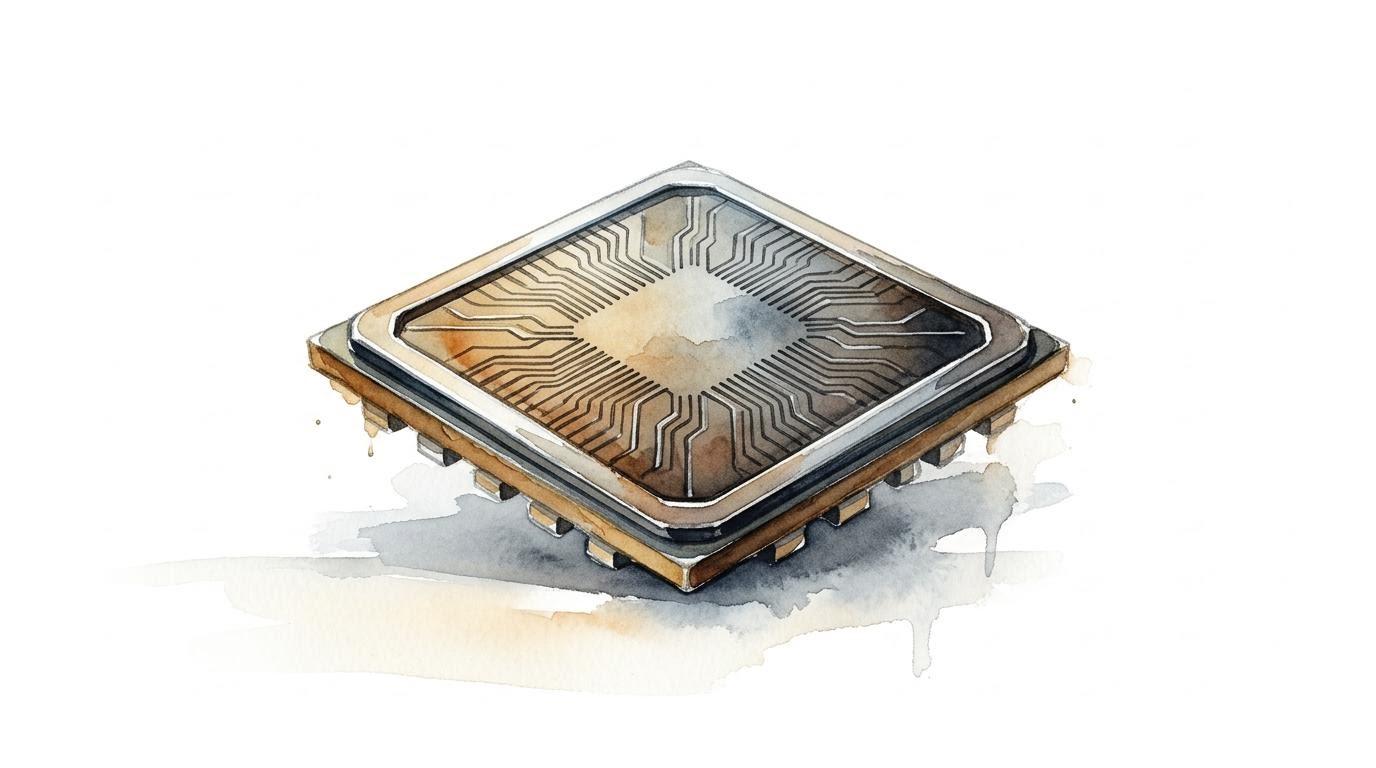
DeepSeek reportedly plans to pretrain its next-generation DeepSeek V5 model on Huawei Ascend AI chips. The move would push Ascend beyond its more common inference role and test whether Chinese accelerators can handle frontier-scale pretraining, potentially reducing reliance on Nvidia hardware if successful.

  • Huawei reportedly deployed more than 3,000 Ascend chips around Chinese New Year to support DeepSeek V3 and R1 on Huawei Cloud.
  • After DeepSeek V4 arrived in April 2026, Huawei said Ascend SuperPoD systems could fully support the V4 model family through joint optimization.
  • On September 30, DeepSeek released Ascend-adapted infrastructure components, including compiler tools, high-performance computing libraries, and distributed communication software.

Research & Analysis

Hydrogen-1.0 brings open weights to science AI

Deep Principle released Hydrogen-1.0, a 753B-parameter open-weight model built for scientific research. It is based on GLM-5.3 and positioned for tasks such as planning experiments, debugging simulations, rehearsing lab procedures, and finding materials candidates, with a reported 1M-token context and 128K-token output budget.

  • The Hugging Face model card lists the license as MIT, with public access requiring users to accept repository conditions.
  • Deep Principle published separate NVFP4 and MXFP4 versions targeting NVIDIA Blackwell and AMD Instinct MI350X or MI355X hardware.
  • The deployment notes say Hydrogen-1.0 was tested with SGLang on 8 GPUs and requires keeping the generation configuration so outputs stop correctly.

Linum trains an image model for $21K

Linum detailed how its two-person research lab trained a generative image model as part of a broader push toward video models and animation tools. Its Pyramid-JiT architecture works in pixel space and uses aggressive token reduction plus a noise-schedule curriculum to preserve fine detail on a limited compute budget.

  • The release includes 249 samples from a 2B Pyramid-JiT model, grouped across people, animals, buildings, products, landscapes, and stylized images.
  • The compute budget totaled 8,415 H100-hours, priced at $2.50 per H100-hour across pretraining and post-training.
  • The model was trained on 610M samples at 512² before moving to 50M samples at 1024².

LoCo teaches reasoning models when to stop

Researchers propose LoCo, a local preference learning method for compressing reasoning traces. It finds overthinking states in a model's own traces, keeps the prefix fixed, regenerates shorter verified continuations, and trains on state-conditioned preference pairs with DPO.

  • The Hugging Face paper page lists LoCo as the number 3 paper of the day after its November 3 publication.
  • Training data is constructed entirely from self-generated mathematical traces, yet the reported gains transfer to code-generation benchmarks.
  • In a discussion response, the submitter said early stopping mainly reduces redundant verification while preserving necessary verification when the model is not yet confident.

ScientistTwo claims autonomous research gains

ScientistTwo is presented as a fully autonomous multi-agent framework for scientific discovery. The paper says the system takes an initial problem, builds baselines, proposes hypotheses, runs experiments, performs ablations, and uses simulated peer review as part of a closed research loop.

  • The arXiv paper was submitted on September 17, 2026 under Computer Science and Artificial Intelligence.
  • The author list includes Jaehyun Nam, Jinsung Yoon, Yanzhou Pan, Yubo Wang, Rui Meng, Parthasarathy Ranganathan, and Tomas Pfister.
  • The benchmark comparison uses papers accepted at ICLR, ICML, and NeurIPS as the reference standard for human scientific achievement.

Trending AI Tools

  • CrowdStrike AI Kill Switch An emergency stop for Falcon Guardian that cuts an agent's link to its model, with human-admin control and logging.

  • OpenAI Bug Bounty OpenAI raised payouts to as much as $172,000 for a critical finding as part of a security hardening push.

  • Gemini Notebook API A REST API for creating and managing Gemini Notebook notebooks and sources from web pages, YouTube videos, plain text, and Markdown.

Quick Hits

  • Google Search in schools may require districts to accept Search, Gemini, and Gemini Notebook as a bundled control choice for K-12 student accounts early next year.

  • fal raises $1.3B at a $16 billion valuation, doubling its April valuation for its AI image and video model hosting platform.

Keep reading for free

Enter your email. If you're already subscribed, we'll send a sign-in code. If not, you'll subscribe in the next step.

Free access. Subscribe once, then use the same email on future issues.

Free to read. Subscription just unlocks the full issue.