Thursday, June 4, 2026

Codex Moves Beyond Coding

Codex Moves Beyond Coding

Today’s Overview

Good morning, OpenAI is pushing Codex into everyday knowledge work, Nvidia may be readying a major AI PC moment, and researchers are borrowing from human sleep to rethink continual learning. The common thread is simple: AI is moving from clever demos into the messy workflows, devices, and memory systems people actually use. Let's dive in.

Top Stories

OpenAI Turns Codex Into a Knowledge Work Platform

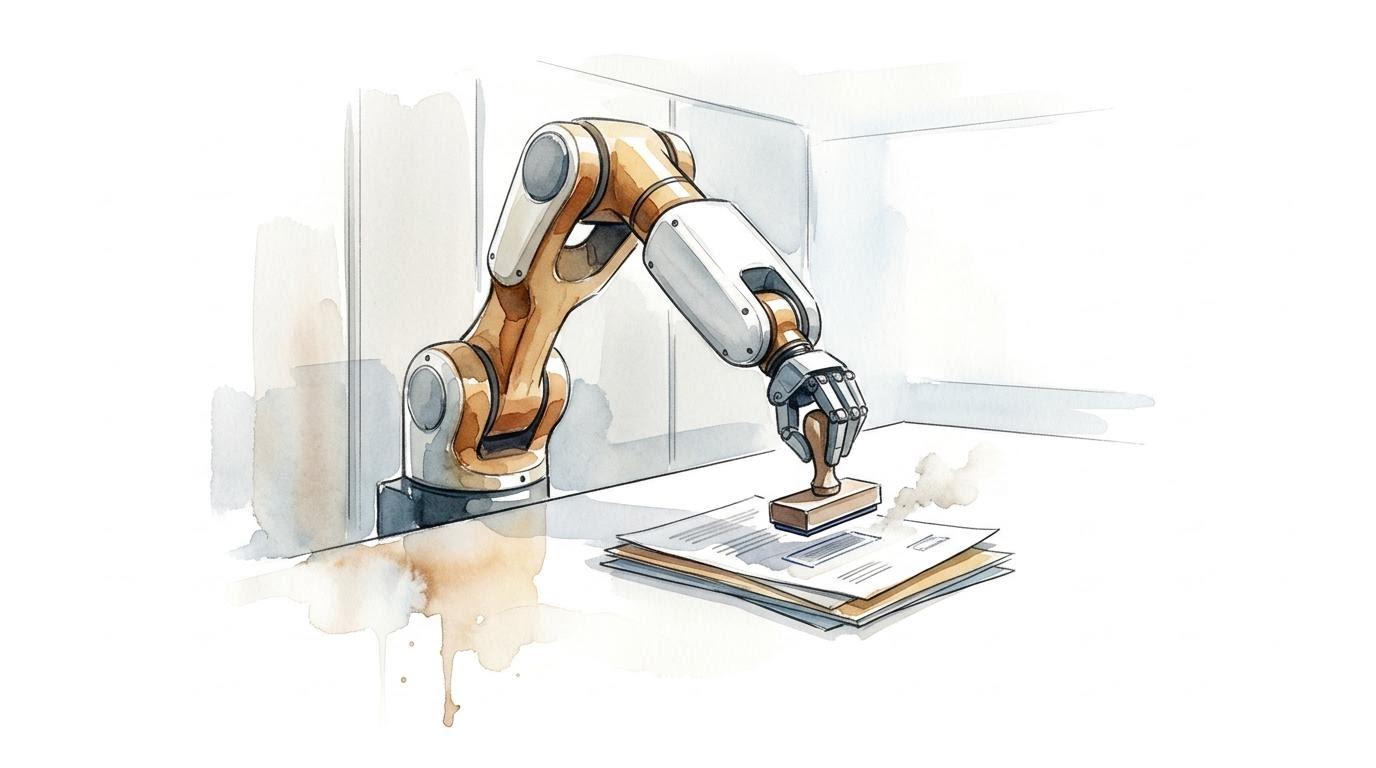
OpenAI is extending Codex beyond programming into a broader enterprise app layer. The platform is being positioned for role-specific workflows, live-data web app publishing, document editing, job listings, resume generation, infrastructure expansion, government-cloud deployments, secure code review, threat detection, and robotics work.

  • Codex has reached 5 million weekly users, with usage rising more than sixfold since the desktop app launched in February.
  • Knowledge workers now make up about 20 percent of Codex users and are growing more than three times as fast as developers.
  • OpenAI says the fastest-growing noncoding uses are data analysis, research, and artifact creation, including reports, spreadsheets, presentations, contracts, and lightweight tools.

Nvidia Readies N1X and Vera Rubin for Computex

Nvidia is expected to use Computex 2026 to highlight its N1X laptop chip and its Vera Rubin AI platform for datacenters. The announcements would widen Nvidia's AI hardware push across laptops, datacenters, robotics, and autonomous systems, while gaming appears to play a smaller role.

  • The N1X is described as pairing 20 ARM cores with 6,144 CUDA cores in a single package using a shared memory pool.
  • Its AI advantage may come from large VRAM allocation through unified memory, aimed at running 100B-plus parameter models locally.
  • The Computex focus is expected to include Jetson Thor and other edge AI platforms for robotics, autonomous machines, and physical AI applications.

Research & Analysis

Researchers Propose Sleep for Continual Learning

Google researchers propose a Sleep paradigm for helping models turn short-term in-context knowledge into longer-term parameters. The method combines distillation, replay, and a Dreaming stage that uses reinforcement learning to generate synthetic curricula for self-improvement.

  • The paper frames the core gap as models lacking a way to transfer temporal knowledge from in-context learning into stable long-term parameters.
  • Its Memory Consolidation stage uses Knowledge Seeding, an upward distillation process from a smaller self into a larger network.
  • The authors evaluate the idea on long-horizon continual learning, knowledge incorporation, and few-shot generalization tasks.

Trending AI Tools

  • GitHub Copilot App A desktop Copilot experience that uses git worktrees to run parallel agents for agent-native development.

  • Reve 2.0 An image model focused on layout-driven editing, segment-level control, and post-generation changes.

  • Mistral Search Toolkit An open-source public preview for production AI pipelines that unifies ingestion, retrieval, and evaluation.

Quick Hits

  • Anthropic expands Project Glasswing to 150 more partners across more than 15 countries, with security requirements before access and more than 10,000 high or critical flaws already found by partners.

  • U.S. tightens China chip curbs by extending export license requirements to advanced chips sold to entities headquartered in China, even when they buy through overseas subsidiaries.

  • Morgan Stanley opens wealth platforms to agents letting AI agents from thousands of corporations access systems such as ShareWorks and Equity Edge.

  • MiniMax M3 is an open-weights model for coding and agentic work with image and video input, desktop operation, and context windows of up to 1 million tokens.

Keep reading for free

Enter your email. If you're already subscribed, we'll send a sign-in code. If not, you'll subscribe in the next step.

Free access. Subscribe once, then use the same email on future issues.

Free to read. Subscription just unlocks the full issue.