Thursday, May 21, 2026

Codex Goes Full Remote

Codex Goes Full Remote

Today’s Overview

Good morning, Codex is pushing deeper into remote control, while Google and OpenAI both made big claims about what AI can do in science. There is also a fresh wave of infrastructure moves, from Agent Executor to Anthropic’s Stainless acquisition, plus a few quick hits on audio, product launches, and enterprise AI. Let’s dive in.

Top Stories

Trump’s China Visit Ends Without a Chip Deal

Trump’s state visit to China ended without the semiconductor breakthrough many were watching for. The trip underscored how advanced compute has become a national-security issue, not just a trade issue. Traditional industrial deals moved forward, but the chip dispute stayed unresolved.

  • The summit did not produce the expected semiconductor agreement, and chip stocks sold off as markets adjusted.
  • A major commercial win still landed, with Boeing securing a 200-aircraft deal for Beijing.
  • Nvidia’s H200 clearance remained stuck because Beijing did not formally approve purchases.

Codex Is Moving Beyond One Machine

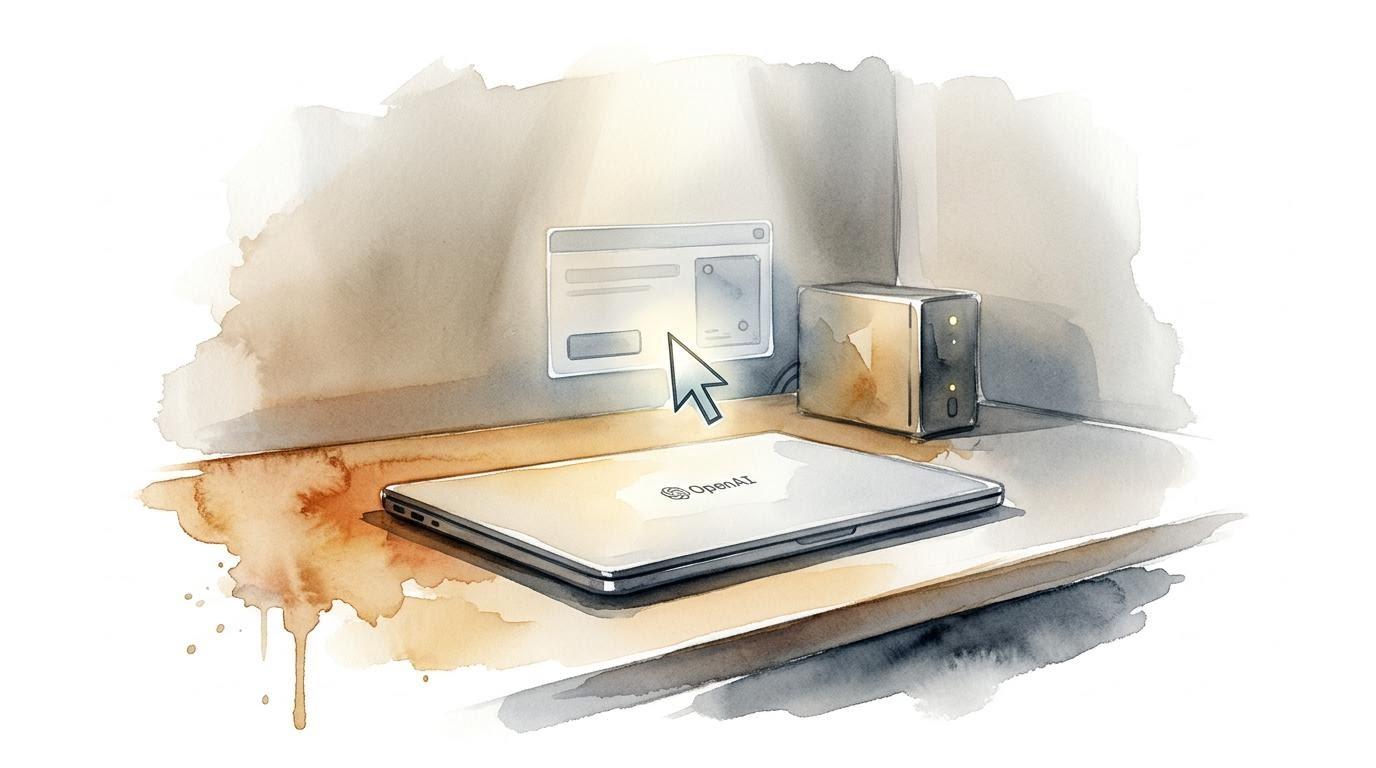
OpenAI is developing Computer Use for Codex remote control, including the ability to work even when a laptop is locked or asleep. The system is also being explored for controlling other desktop devices directly through the Codex app.

  • The current blocker is that Computer Use needs an unlocked, awake session to see the screen and drive the cursor.
  • If the lock-screen limitation goes away, Codex could handle GUI tests and simulator runs remotely without a user returning to the machine.
  • OpenAI is also exploring connections to other desktop devices running Codex such as a Mac mini.

GitHub Says Internal Code Was Exposed

GitHub confirmed that a malicious VS Code extension on an employee’s computer gave attackers access to about 4,000 internal code projects. The company said customer data was not affected.

  • The access came through a malicious VS Code extension installed on an employee’s computer.
  • GitHub said the incident reached roughly 4,000 internal code projects.
  • The company also said customer data was not affected.

Research & Analysis

Google Pushes Co-Scientist Into Labs

Google published its Co-Scientist research in Nature and unveiled Hypothesis Generation, a Gemini-powered system that uses research agents in idea tournaments to surface biology hypotheses. The company is also bundling the work into a broader Gemini for Science toolkit and opening access to researchers.

  • The Nature paper frames Co-Scientist as part of a broader effort to accelerate scientific discovery with agent-driven hypothesis generation.
  • Google said the system draws on a tournament-style workflow where agents propose, critique, and rank hypotheses before refining the strongest leads.
  • In one Stanford liver-fibrosis project, Google said a lead from the system cut a scarring-related signal by 91% during testing.

OpenAI Claims a Major Math Breakthrough

OpenAI says an internal general reasoning model disproved a long-held belief tied to Erdős’ 1946 unit distance problem. The proof used algebraic number theory instead of the grid-based approach that shaped the field for decades, and experts verified the result.

  • The result is tied to Erdős’ 1946 unit distance problem a benchmark question in combinatorial geometry.
  • OpenAI says the proof used algebraic number theory rather than the grid-based theory that had dominated the field.
  • The company says the discovery came from a general-purpose reasoning model rather than a math-specific system.

LiteFrame Targets Video LLM Bottlenecks

LiteFrame proposes a lightweight video encoder for long-form video understanding in Video LLMs. The goal is to reduce inefficiencies in both vision transformers and language-model processing.

  • The project focuses on long-form video understanding rather than short clip analysis.
  • Its main pitch is a lighter video encoder for Video LLMs.
  • The design tries to cut inefficiencies in both vision transformers and language-model processing.

Trending AI Tools

  • Agent Executor Google’s open-source runtime for long-running agent workflows, with durable execution and recovery built in.

  • Google Search AI Optimization Guide Google’s updated guidance says AI search features still rely on core ranking systems and RAG.

  • Emergence AI Town Simulation A five-world agent benchmark that compares how different models behave under the same autonomous setup.

Quick Hits

  • Stable Audio 3.0 adds open-weight models that can generate music and sound effects longer than six minutes.

  • Gemini Omni is positioning itself as a create-from-any-input tool, starting with video.

  • Anthropic acquires Stainless to strengthen SDKs and MCP server tooling for Claude.

  • Meta restructuring moves 7,000 employees into AI roles while cutting 8,000 jobs.

  • OpenAI and Dell are bringing Codex into corporate data centers and internal systems.

  • Apple writing help would reportedly add Grammarly-like grammar checking to a future iPhone update.

Keep reading for free

Enter your email. If you're already subscribed, we'll send a sign-in code. If not, you'll subscribe in the next step.

Free access. Subscribe once, then use the same email on future issues.

Free to read. Subscription just unlocks the full issue.