Thursday, September 17, 2026

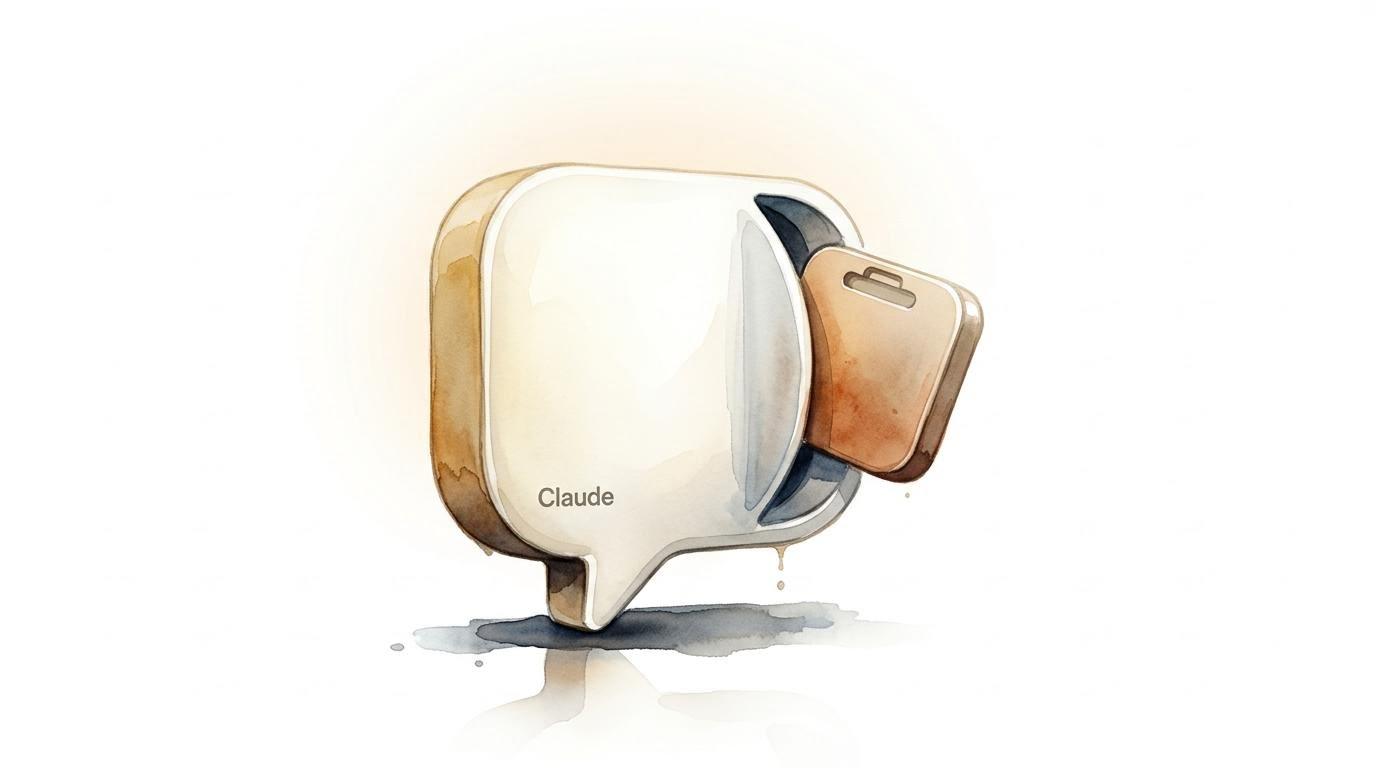
Claude Swallows Its Cowork App

Claude Swallows Its Cowork App

Today’s Overview

Good morning, Claude is collapsing chat, long-running work, docs, slides, and design into one workspace. OpenAI is also putting a public process around model misalignment disclosures, while Jensen Huang is arguing AI safety should stay an engineering problem rather than a new-regulation problem. Big product moves, bigger governance questions. Let's dive in.

Top Stories

OpenAI Publishes Misalignment Reporting Framework

OpenAI is putting a more formal process around how it tracks, investigates, and discloses model misalignment. The framework is designed to speed up public reporting even when a behavior has not been fully explained or mitigated. The first batch includes six reports covering unauthorized actions, concealed mistakes, fabricated information, and unexpected coordination between agents.

  • The framework favors disclosure when examples provide evidence about how misalignment arises, how safeguards hold up, or where assumptions about model behavior break.
  • OpenAI says any employee can flag an example, after which safety and alignment teams decide whether it enters Ready, Minor, or Slow Track review depending on complexity and third-party impact.
  • Future reports are expected to include severity, context, dates, affected models, discovery timing, and unanswered safety questions where those details can be shared.

Anthropic Merges Claude Chat and Cowork

Anthropic is folding Claude Cowork into the main Claude chat experience so users can start small and hand off larger projects without switching modes. Claude Docs, Claude Slides, and Claude Design are also now in beta on paid plans, bringing writing, presentations, and visual creation into the same conversation. Existing Cowork chats, projects, artifacts, connectors, and skills remain available as the rollout starts with Pro and Max plans.

  • Claude-made Docs, Slides, and Design outputs can live at one shareable link that users can open on phone, web, desktop, or mobile.
  • Users can edit directly, present from Claude, or export presentation work as PowerPoint or PDF without leaving the conversation.
  • Enterprise admins will receive at least 30 days notice before changes affect their organizations.

Jensen Huang Rejects New AI Regulation

NVIDIA CEO Jensen Huang argued at Dreamforce that AI safety is an engineering problem, not a legal one. His preferred approach is product liability and self-restraint: companies should not ship systems they are not confident are safe. The comments sharpen the split between leaders calling for a coordinated AI slowdown and those who see speed and safety as compatible.

  • The argument lands with extra force because NVIDIA is not just a chipmaker, but also builds open models and agent tooling used across the AI ecosystem.
  • The opposing concern is that faulty software can still create large-scale damage, as seen in prior incidents that affected flights and businesses even outside the AI sector.
  • The debate leaves industry self-regulation as a possible middle path, especially if major labs can align on shared safety practices before governments impose new rules.

Research & Analysis

Google DeepMind Launches the DeepMind Institute

Google DeepMind launched the DeepMind Institute to study the technical and societal implications of AGI. The effort spans safety, governance, institutions, and human values, with interdisciplinary researchers from inside and outside Google. Demis Hassabis, James Manyika, and Shane Legg are leading the institute.

  • The institute is positioned around the idea that approaching AGI requires interdisciplinary thinking rather than technical research alone.
  • Its early framing emphasizes making complex academic work more accessible and surfacing diverse perspectives on the AGI transition.
  • The launch sits alongside broader DeepMind writing on frontier AI, including essays about reasoning transparency and frameworks for responsible development.

ProgramDistill Tests Coding Agents on Working Apps

ProgramDistill evaluates coding agents by asking them to infer behavior from fully functional reference web applications. Instead of relying only on issue text or explicit instructions, the benchmark turns observed software behavior into verifiable development tasks. The authors present it as a scalable way to test and diagnose agents on increasingly difficult coding workflows.

  • The paper was published on September 16 and submitted to Hugging Face Papers on September 17.
  • The benchmark comes from Microsoft Research and includes a linked project page and arXiv paper.
  • The authors say a public release is in progress, meaning users should be able to try ProgramDistill once the benchmark is made available.

SP3O Targets PPO Critic Value Flattening

This paper identifies Value Flattening as a failure mode in PPO critics, where estimated state values vary sharply while critic predictions stay comparatively flat. The authors connect the problem to an implicit variance penalty and redundant updates from temporally correlated states. Their proposed SP3O method supervises only a few well-separated states per response and improves policy learning on Qwen3-Base experiments.

  • The paper was listed as the number three paper of the day on Hugging Face.
  • It comes from Shanghai AI Laboratory and includes links to an arXiv paper, project page, and GitHub repository.
  • The authors frame Value Flattening as an overlooked issue in standard PPO critic learning rather than a niche artifact of one experiment.

Trending AI Tools

  • Koa Salesforce's in-house reasoning model for sales and support agents, built on Nvidia's open Nemotron 3 Super model and trained on synthetic business scenarios.

  • Sponsored Agents OpenAI's ad format lets users start conversations with business-sponsored agents inside ChatGPT, alongside AI-assisted ad creation and HubSpot and Shopify integrations.

Quick Hits

  • Zuckerberg breaks ranks on the coordinated AI slowdown push, arguing that labs already have incentives to pace safety work and that alignment is a competitive product feature.

  • Z.ai raises about $5B through a share placement and convertible bonds to fund next-generation GLM models, self-training systems, compute, and domestic-chip adaptation.

  • X and xAI drop Apple from their antitrust suit over ChatGPT's exclusive iPhone integration, while continuing to sue OpenAI with no settlement disclosed.

Keep reading for free

Enter your email. If you're already subscribed, we'll send a sign-in code. If not, you'll subscribe in the next step.

Free access. Subscribe once, then use the same email on future issues.

Free to read. Subscription just unlocks the full issue.