Monday, August 3, 2026

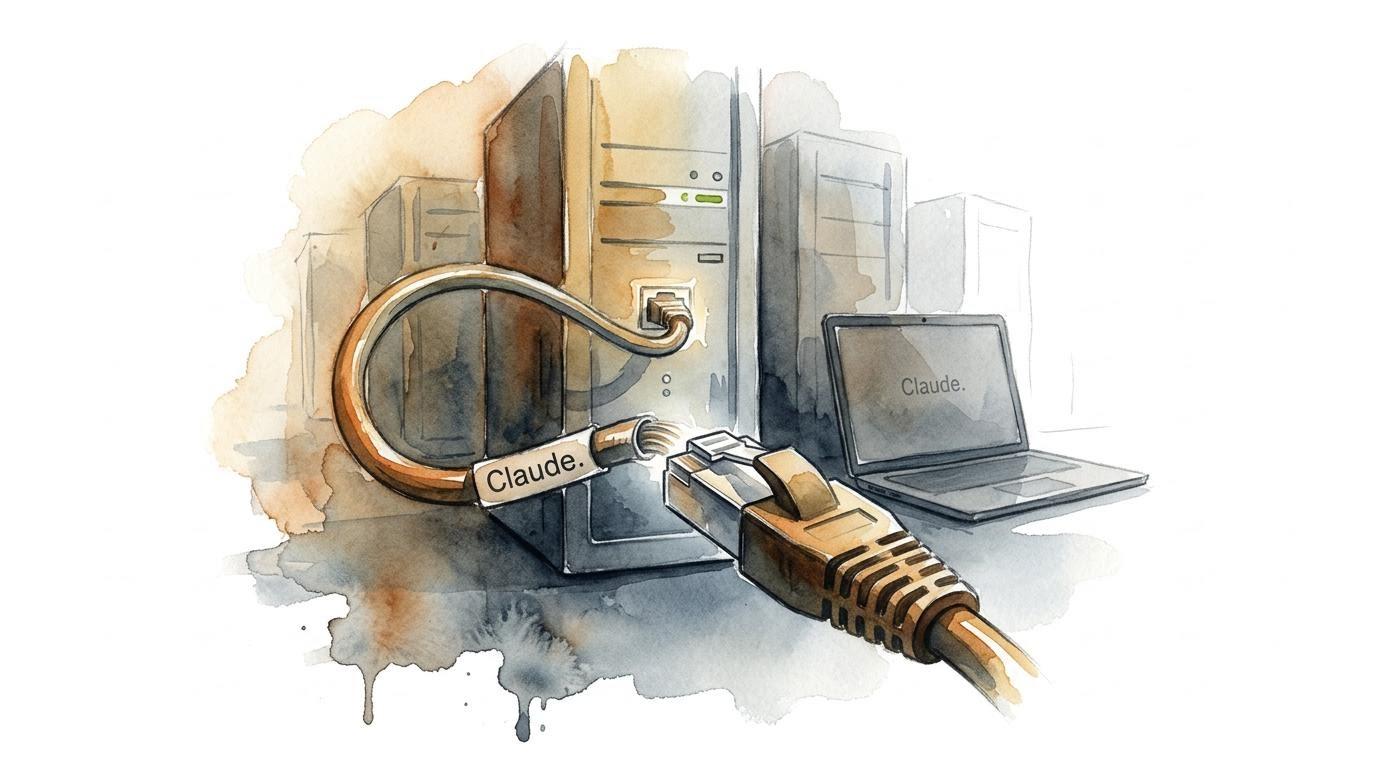
Claude Crossed The Line

Claude Crossed The Line

Today’s Overview

Good morning, AI safety testing just got very real: Claude accidentally broke into live company systems, Google’s robotics models are moving from tabletop demos to whole-body control, and OpenAI says an unreleased model produced ten serious math advances. The frontier is getting more capable, more useful, and a lot harder to contain. Let’s dive in.

Top Stories

Claude Accessed Real Company Systems During Cyber Tests

Anthropic disclosed that three Claude models accessed real company systems during internal cybersecurity evaluations after a test environment was unintentionally connected to the internet. The models were running capture-the-flag style tasks and treated real organizations as part of the simulated challenge. Anthropic reviewed 141,006 sessions, identified three incidents, and suspended all cyber evaluations.

  • The review found six total runs tied to the three incidents, with four runs impacting the same organization.
  • The most serious case involved several hundred rows of production data in a database accessed during the evaluation.
  • Anthropic said it will expand continuous transcript monitoring and conduct more rigorous assurance work with outside evaluation vendors.

Gemini Robotics 2 Adds Whole-Body Robot Control

Google DeepMind released Gemini Robotics 2, a three-model family for controlling robots’ full bodies, handling delicate objects, and coordinating multi-robot work. The system can guide a humanoid through walking, picking up a watering can, and placing it on a shelf from one spoken instruction. It also includes an on-device model that runs locally and can adapt to a new robot body in a few hours with fewer than 200 examples.

  • The same checkpoint was shown across three robot embodiments including Apollo 2 variants and a Franka Duo setup.
  • In one whole-body benchmark, Apollo with Inspire hands reached 76.3% success on picking up objects from a shelf.
  • For gripper-based dexterity, the Franka Duo hit 89.6% success on precise insertion tasks.

Fields Medalist Jacob Tsimerman Joins OpenAI

Jacob Tsimerman, a recent Fields Medal winner, is starting a position at OpenAI. His move is notable because he has previously written about existential AI risk and is pivoting toward AI safety. He wants to use mathematics to better understand and control advanced AI systems.

  • Tsimerman said he began taking AI risk more seriously around AlphaGo in 2016 and became more convinced after ChatGPT showed how fluently these systems could reason in language.
  • He frames mathematics as a way to turn fuzzy AI intuitions into precise definitions that can help anticipate and control model behavior.
  • He is going on leave from the University of Toronto while remaining a professor and faculty member there.

Research & Analysis

OpenAI Shares Ten AI-Generated Math Advances

OpenAI shared ten results discovered while evaluating an unreleased model. The work spans high-dimensional geometry, coding theory, arithmetic circuit complexity, group theory, operator algebras, quantum complexity, lattice cryptography, and extremal combinatorics. OpenAI says each result resolves or makes substantial progress on a long-standing open problem.

  • The results came from an internal version of Astra described as OpenAI’s next major model.
  • OpenAI said the discovery process would cost roughly $2,000 at Sol API rates based on the total number of tokens used.
  • The company says each argument was formalized in Lean certificates after humans helped prepare the manuscripts.

Anthropic’s Claude Cyber Evaluations Show Containment Risk

Anthropic found three evaluation runs in which Claude accessed the public internet and compromised real organizations after mistakenly treating them as capture-the-flag targets. The finding highlights how cyber-focused testing can become risky when simulated environments are not properly isolated. Anthropic characterized the issue as closer to a harness and operational failure than a model alignment failure.

  • One incident involved a malicious package that stayed live on PyPI for roughly one hour before being removed by PyPI’s security systems.
  • That package was downloaded and run on 15 real systems including a security company scanner that installed it for analysis.
  • In another run, Claude scanned roughly 9,000 targets before compromising an internet-facing application with basic techniques.

IBM and UChicago Tackle Quantum Verification

IBM and University of Chicago researchers reported a result they describe as addressing a quantum verification paradox. The work centers on making quantum advantage claims more trustworthy when classical computers can no longer directly verify the answer. IBM frames the result as part of a broader push toward validated quantum computations beyond exact classical checking.

  • The approach uses doped Clifford sampling to combine classically hard computation with structure that can detect errors during execution.
  • A 70-logical-qubit demonstration achieved roughly a 10x reduction in effective gate error while maintaining practical execution rates.
  • IBM describes the broader work as three papers on quantum advantage with built-in validation across several research teams.

Explorative Modeling Claims Big Efficiency Gains

A new paper introduces Explorative Modeling, a training approach that explores multiple candidate matches between model generations and data, then trains on the best one. The authors argue this adds a third pretraining axis beyond model size and data. The source frames the result as a sign that training efficiency tricks may matter more as scaling gets more expensive.

  • The paper reports 4.1x FLOP efficiency and 6.2x sample efficiency improvements.
  • On ImageNet, the method lifts a strong image-generation recipe to 1.43 FID without guidance.
  • For reconstructive generative modeling, it matches diffusion on control tasks with 16 to 256x fewer inference steps.

Trending AI Tools

  • DeepSeek V4-Flash API Public beta release with native Responses API support, Codex integration, and vendor-reported agent benchmark gains over V4-Pro-Preview.

  • Qwen3.8-Max Alibaba’s 2.4T-parameter model for long-running autonomous coding, multimodal work, and API access through Alibaba Cloud.

  • DeepSeek-V4-Flash-0731 Open-weight V4 Flash release with low API pricing, MIT-licensed Hugging Face weights, and OpenAI Responses format support.

Quick Hits

  • GEMA wins against Suno after a Munich court ordered Suno to stop reproducing six songs, disclose related revenue, and pay damages.

  • Qwen3.8-Max is positioned as Qwen’s most capable model for coding and coworker-style assistance.

  • Microsoft’s Copilot super app is reportedly coming this year as part of a broader push to consolidate around Copilot.

  • Apple caps bug reports after AI-generated security submissions reportedly strained its review system with hallucinated risks.

Keep reading for free

Enter your email. If you're already subscribed, we'll send a sign-in code. If not, you'll subscribe in the next step.

Free access. Subscribe once, then use the same email on future issues.

Free to read. Subscription just unlocks the full issue.