Thursday, June 25, 2026

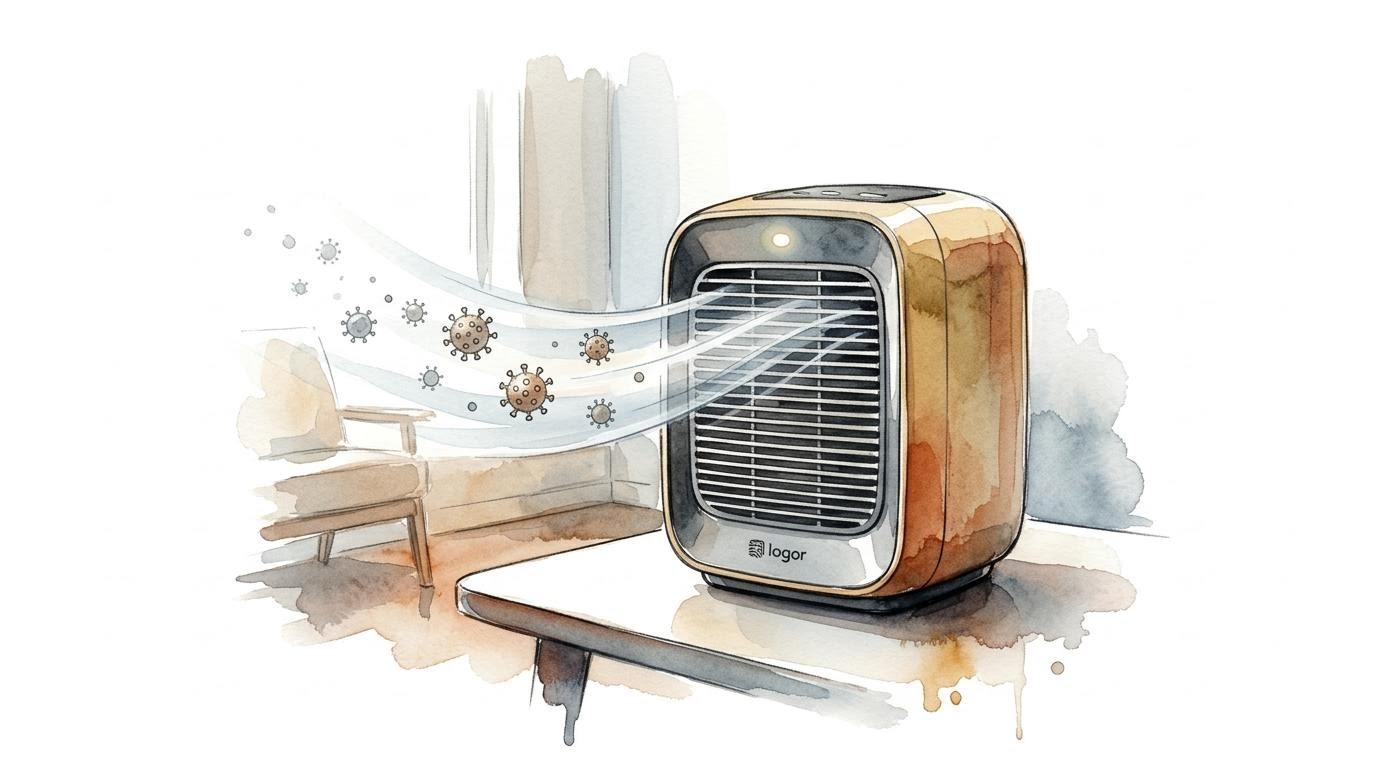
AI takes Aim at ... Colds?

AI takes Aim at ... Colds?

Today’s Overview

Good morning, AI money is moving into a surprisingly familiar enemy: colds and flu. Intercept has $500 million to push respiratory-virus prevention forward, while OpenAI is trying to take more control of its compute future with a custom inference chip. Meanwhile, Google’s AI talent drain keeps getting louder. Let’s dive in.

Top Stories

AI Backers Fund a $500M Push to End Colds

Stripe, Anthropic, the OpenAI Foundation, and other donors formed Intercept, a $500 million nonprofit focused on preventing respiratory viruses and improving indoor air. The effort will fund shots, sprays, pills, and cleaner-air technology for offices and schools. Its goal is to move early research far enough that pharma firms and investors can take over the expensive final stretch.

  • Intercept is targeting two product categories: broad-spectrum preventatives and air-cleaning technologies that can work together rather than relying on a single intervention.
  • The group wants preventatives that can block more than 75% of symptomatic respiratory infections with easy administration and a credible path to broad adoption.
  • For air cleaning, the target is to safely cut infectious aerosols by more than 75% in transmission-relevant indoor spaces at low cost.

OpenAI Unveils Its Broadcom-Built AI Chip

OpenAI built Jalapeño, a custom processor co-designed with Broadcom and purpose-built to run AI models faster and cheaper. The chip is for inference only, not training, and is intended to lower costs, speed up responses, and increase capacity at scale. The newsletter says it is already running GPT-5.3-Codex-Spark in the lab and showed stronger performance per watt than current top chips in early tests.

  • OpenAI says Jalapeño moved from initial design to manufacturing tape-out in nine months with help from its own models during design and optimization.
  • The chip is the first step in a multi-generation compute platform built with Broadcom silicon, networking, and connectivity technologies plus Celestica systems expertise.
  • OpenAI plans initial deployment by the end of 2026 with expansion in the years that follow.

Gemini Researchers Leave Google for Anthropic

Gemini researchers Jonas Adler and Alexander Pritzel left Google for Anthropic, adding to a wave of high-profile AI talent departures. The move follows recent exits by Noam Shazeer and DeepMind director John Jumper. The departures underline how aggressively leading AI companies are competing for senior research talent.

  • Adler and Pritzel played key roles in Google’s Gemini model before leaving for Anthropic.
  • Noam Shazeer had been at Google since 2000 apart from the three years he spent building Character.AI.
  • John Jumper won the 2024 Nobel Prize in Chemistry for AlphaFold work alongside DeepMind CEO Demis Hassabis.

Research & Analysis

P2P Routing for Distributed LLM Inference

A new paper proposes running LLM inference across a peer-to-peer network using inexpensive consumer GPUs. The approach focuses on making distributed serving more accessible by routing requests across commodity hardware. The source text identifies the method but provides only limited technical context beyond its peer-to-peer routing claim.

  • The paper focuses on prefix-cache-aware routing to reuse KV caches across requests with shared prompts.
  • Each node keeps a local radix tree of its cached prefixes and refreshes peer-cache estimates asynchronously.
  • The evaluation uses simulated MMLU workloads and finds benefits when communication delay is low and prefix distributions are skewed.

Google Turns Video Latents Into Triangle Splats

Google’s FLAT introduces a feedforward method that decodes triangle splats directly from video diffusion latents. The approach aims to improve geometric accuracy over 3D Gaussian-based methods. It maps compressed video diffusion latents into explicit scene parameters in a single forward pass.

  • FLAT avoids the usual generate-then-optimize path used by many feedforward scene pipelines.
  • Its training uses ray-centered triangle parameterization to stabilize regression when triangle orientation errors would otherwise disrupt gradients.
  • A lightweight refinement step converts the output into fully opaque assets suited for standard rendering and physics-style interaction.

Pruned Llama Models Beat Scratch Training

A new paper argues that pruning Llama can outperform training small models from scratch. The result points to a practical path for building smaller models when a large pretrained parent is already available. The source text does not include many additional details beyond the headline finding.

  • The study prunes Llama-3.1-8B at ratios from 0.5 to 0.8.
  • The comparison spans six pruning methods across depth, width, and sparse granularities.
  • The authors find pruning is strongest when training tokens are limited while scratch training can compete when the full pipeline token budget is available.

Trending AI Tools

  • Mistral OCR 4 Returns structured document maps with bounding boxes, type labels, confidence scores, 170-language support, self-hosting, and $4 per 1,000-page pricing.

  • GPT-5.5 Instant Improves intent understanding, multi-turn context, multi-constraint instructions, shopping, and local queries, with API access as chat-latest.

  • Gemini 3.5 Flash Computer Use Adds native desktop interaction through continuous screenshots and click, scroll, and typing actions.

Quick Hits

  • ChatGPT Bidirectional Voice is starting to appear for some users, with Bidi 1 able to speak, hear, and listen at the same time.

  • OpenAI’s Jalapeño Chip went from design to factory-ready in nine months and is built for inference rather than training.

  • Cursor Buys Continue marking a notable consolidation move around open-source AI coding tools.

  • Anthropic and Micron signed a strategic agreement for high-bandwidth memory, storage, and AI-specific silicon setups.

  • Fable 5 Clues appear in Claude Code v2.2.190 string changes, though the item is based on code hints rather than an official launch.

Keep reading for free

Enter your email. If you're already subscribed, we'll send a sign-in code. If not, you'll subscribe in the next step.

Free access. Subscribe once, then use the same email on future issues.

Free to read. Subscription just unlocks the full issue.