March 13, 2026

AI doctor in your pocket, wearables meet hospitals & more

AI doctor in your pocket, wearables meet hospitals & more

Today’s Overview

Enterprises are accelerating the adoption of autonomous AI agents and domain‑specific assistants, driven by platform upgrades from OpenAI and Nvidia and large‑scale health and productivity tools from Microsoft and Anthropic. Significant capital commitments and ecosystem programs are fueling rapid integration of these capabilities across cloud, developer, and enterprise environments.

  • OpenAI upgraded its Responses API into an autonomous agent execution environment with Unix shell access and support for Go, Java, and NodeJS, and integrated the Sora video generator into ChatGPT.
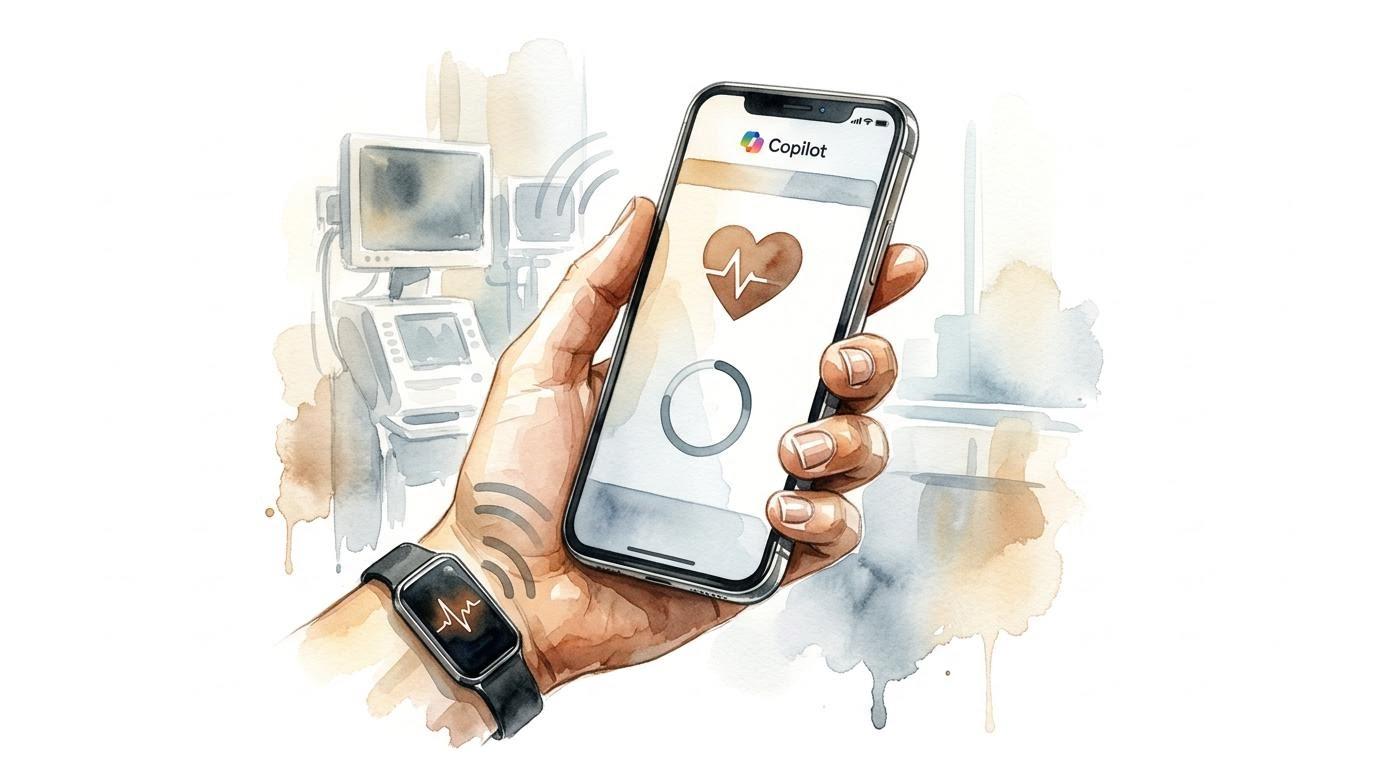
  • Microsoft launched Copilot Health, an AI assistant that aggregates data from over 50 wearables and 50,000 U.S. hospitals to provide physician‑level health insights at scale.
  • Anthropic released Claude Code Review, a multi‑agent service that automatically evaluates AI‑generated pull requests on GitHub, targeting a $2.5 billion developer productivity bottleneck.
  • Nvidia announced the open‑source NemoClaw platform, enabling enterprises such as Salesforce and Google to deploy AI agents across heterogeneous hardware.
  • Anthropic pledged $100 million to its Claude Partner Network to accelerate enterprise adoption of Claude‑based solutions.

Top Stories

OpenAI introduces agentic OS features and adds Sora video generator to ChatGPT

OpenAI upgraded its Responses API into a dedicated computer environment that enables GPT-5.2 and later models to execute long-running tasks autonomously. The new environment offers Unix-style shell commands and support for Go, Java, and NodeJS, allowing developers to run complex scripts directly. Models can store reusable "agent skills" as folders of scripts that are discovered and run without external orchestration. Consumer updates include the integration of the Sora video generator into ChatGPT, a finance project for spending analysis, and a new Pro Lite subscription tier with higher usage limits.

Read Full Article

Anthropic unveils Claude Code Review to address $2.5B developer bottleneck

Anthropic released Code Review for Claude Code, a multi-agent service that evaluates AI-generated pull requests. Specialized agents examine code for logic errors, security issues, and performance, while an aggregator surfaces the most critical findings. The service integrates directly with GitHub and is billed based on token usage. Anthropic estimates the offering addresses a $2.5 billion productivity bottleneck caused by manual verification of large volumes of AI-written code.

Read Full Article

Microsoft releases Copilot Health AI assistant for personalized medical insights

Microsoft launched Copilot Health, an AI-driven assistant that consolidates wearable data and electronic health records to provide personalized health insights. The service connects with over 50 wearable devices and accesses records from more than 50,000 US hospitals. Insights are sourced from reputable medical organizations and include links to original references. CEO Mustafa Suleyman describes the initiative as a move toward "medical superintelligence," combining general physician knowledge with specialist depth for broad, affordable access.

Read Full Article

Research & Analysis

Reasoning boosts factual recall but may introduce hallucinated facts, Google finds

Google conducted controlled experiments to assess the impact of reasoning capabilities on factual recall in language models. Enabling reasoning provided a computational buffer that generated related intermediate facts, improving single-hop recall performance. However, the presence of hallucinated intermediate facts sometimes increased errors in the final answer. The findings highlight a trade-off between enhanced retrieval and the risk of propagated inaccuracies.

Read Source

Google trains AI on historic news to improve flash-flood predictions

Google is leveraging archived news reports combined with artificial intelligence to improve flash-flood forecasting. By integrating historical news data with real-time observations, the models can generate earlier and more accurate flood warnings. The approach enhances situational awareness for affected communities and emergency responders. This initiative demonstrates the potential of combining legacy textual sources with modern AI for disaster prediction.

Read Source

Trending Tools

Quick Hits

Join the AI Recap Newsletter

Get the latest AI news, research insights, and practical implementation guides delivered to your inbox daily.

By subscribing, you agree to our Terms of Service and Privacy Policy.